

Optical Fiber

Duct Optical Fiber Cable

Anti Rodent Biting Fiber Cable

Non-metal Dielectric Optical Cable

Fig.8 Self-support Optical Fiber Cable

Direct Burial Optical Fiber Cable

Optical Fiber Composite Low-voltage Cable

All Dielectric Optical Fiber Cable and Mini Adss (asu)

Ftth Drop Cable and Patch Cords

Indoor Optical Fiber Cable
Non-Metallic Dielectric Fiber Optic Cables
Reliable all-dielectric fiber optic cable solutions for outdoor communication networks, duct installations and applications requiring non-metallic cable structures. Kexin offers FRP and aramid yarn reinforced cable options, with flexible configurations for different project requirements.


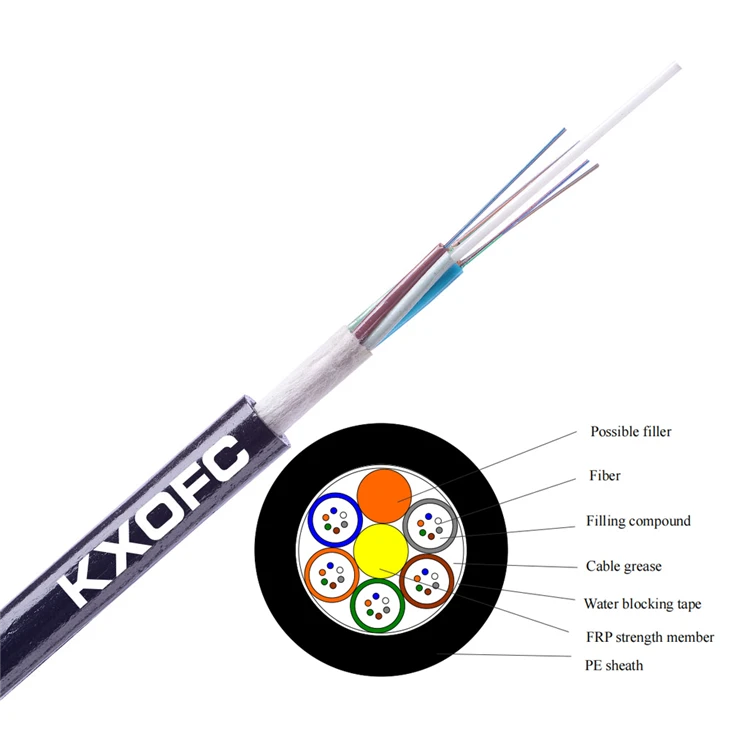
Non-metallic dielectric fiber optic cables use non-conductive reinforcement materials instead of metallic strength members. Depending on the cable design, FRP rods, aramid yarn and protective outer jackets help provide the mechanical support required for different fiber optic network installations.
These cables are suitable for communication projects where electrical isolation, lightweight construction and flexible installation configurations are important considerations. Fiber counts, cable dimensions and structural options can be selected according to specific project requirements.

01. All-Dielectric Structure
Non-metallic reinforcement helps avoid conductive metallic strength members in the cable construction.
02. FRP & Aramid Reinforcement
Different reinforcement combinations support the mechanical requirements of various cable designs.
03. Flexible Customization
Fiber count, cable dimensions, structure and packaging can be discussed according to project needs.

Non-Metallic Fiber Optic Cable Construction
The construction of a non-metallic dielectric fiber optic cable depends on its application and mechanical requirements. Common designs use optical fibers, protective loose tubes, non-metallic strength members and an outer sheath to create a compact cable structure for communication networks.
Optical Fiber & Loose Tube
Optical fibers are housed inside a protective loose tube. PBT is commonly used as the loose tube material, while filling compound may be applied according to the cable design.
01
FRP Strength Members
Fiber Reinforced Plastic (FRP) provides non-metallic reinforcement and helps maintain the mechanical structure of the optical cable.
02
Aramid Yarn
Aramid yarn can be incorporated into suitable cable designs to provide additional tensile reinforcement without using metallic strength members.
03
PE Outer Sheath
A polyethylene (PE) outer sheath protects the cable structure against environmental exposure in suitable outdoor communication installations.
04
Key Materials Used in Dielectric Optical Cables
Different materials perform different functions in the cable. Their combination is selected according to cable structure, installation conditions and project specifications.
Optical Fiber |
Transmits optical signals for communication networks. |
PBT |
Provides a protective loose tube around optical fibers. |
FRP |
Provides non-metallic structural reinforcement. |
Aramid Yarn |
Provides additional tensile reinforcement in suitable designs. |
Applications of Non-Metallic Fiber Optic Cables
All-dielectric cable designs can be considered for communication infrastructure where non-conductive cable construction is preferred. The suitable cable type depends on the installation method and project environment.

Outdoor Communication Networks
Non-metallic cable structures can be selected for outdoor fiber communication infrastructure.
Duct Installation
Suitable cable configurations can be used in underground communication ducts and cable pathways.
Power Line Environments
All-dielectric construction is an option for communication routes where avoiding conductive cable components is important.
How to Choose the Right Non-Metallic Fiber Optic Cable
Selecting the right cable requires matching its structure and technical parameters with the actual installation conditions.
| Selection Factor | What to Consider |
|---|---|
| Fiber Count | Determine the required number of optical fibers for the network. |
| Fiber Type | Confirm the required fiber standard, such as G.652D or other suitable types. |
| Cable Structure | Choose a suitable loose tube, flat or other cable configuration. |
| Strength Members | Evaluate FRP, aramid yarn or their combination according to mechanical requirements. |
| Installation Method | Confirm whether the cable will be installed in ducts or other suitable pathways. |
| Technical Parameters | Check tensile strength, crush resistance, bending radius and temperature range. |
For customized projects, please share the required fiber count, installation method and technical specifications with our team before confirming the cable configuration.
Why Choose Kexin for Fiber Optic Cable Supply?
Hangzhou Lin'an Kexin Optical Cable Co., Ltd. has been engaged in cable manufacturing for decades, with experience in optical cable production and international trade.

Manufacturing Experience
Kexin began with coaxial cable manufacturing and expanded into optical cable production in 2001.
International Trade Experience
An international trade department was established in 2008, supporting customers in overseas markets.
Product Customization
Cable structures, dimensions and other specifications can be discussed according to project requirements.
Quality Testing
The company has a product quality testing center and supporting testing equipment for cable quality evaluation.
FAQs
Q: Q.What is a non-metallic dielectric fiber optic cable?
A: A:It is a fiber optic cable designed without metallic strength members. Non-conductive materials such as FRP and aramid yarn can be used for reinforcement, depending on the cable structure.
Q: Q.What are the advantages of all-dielectric fiber optic cables?
A: A:Their non-metallic construction avoids conductive metallic strength components. This makes them suitable for projects where electrical isolation and non-conductive cable structures are preferred.
Q: Q.What materials are used in non-metallic fiber optic cables?
A: A:Common materials include optical fiber, PBT loose tubes, FRP strength members, aramid yarn and PE outer sheaths. The exact combination depends on the product design.
Q: Q.Can fiber count and cable dimensions be customized?
A: A:Yes. Fiber count, cable dimensions and structural configurations can be discussed according to specific project requirements and product availability.
Q: Q.Where can non-metallic dielectric optical cables be installed?
A: A:Depending on the cable design, they can be considered for outdoor communication networks, duct installations and other suitable fiber optic infrastructure projects.
Q: Q.How can I select the right cable for my project?
A: A:Please provide the fiber count, fiber type, installation method, required mechanical performance and operating environment. Our team can help you discuss a suitable cable configuration.
Looking for a Non-Metallic Fiber Optic Cable Manufacturer?
Contact Kexin to discuss your fiber optic cable requirements. Share your project specifications, application and quantity to request product information and a quotation.
As one of the most professional non-metal dielectric optical cable manufacturers and suppliers in China, we're featured by quality products and good price. Please rest assured to wholesale discount non-metal dielectric optical cable made in China here and get pricelist from our factory. Customized orders are welcome.