

4 Fiber Optic Cable
GYFXY with yarn kabel fo duct, 4 fiber optic cable are housed in a loose tube that is made of high-modulus plastic with filling compound. Uni-tube non metal optical fiber cable with yarn,the tube is armored with a layer of polyester yarn or aramid yarn and two FRP are placed outside the tube in parallel, then a PE sheath is extruded.
Description
Technical Parameters
our company
Features
- PBT has good hydrolysis resistance and high strength.
- Two parallel FRP and yarns ensure the tensile strength of the cable.
- PE sheath has excellent anti-UV .
- Small diameter, light weight, easy to lay.
- Excellent mechanical properties and temperature characteristics.
*All above the cable size can be customized.
Environmental Characteristics
• Transport/storage temperature: -40℃ to +60℃
Delivery Length
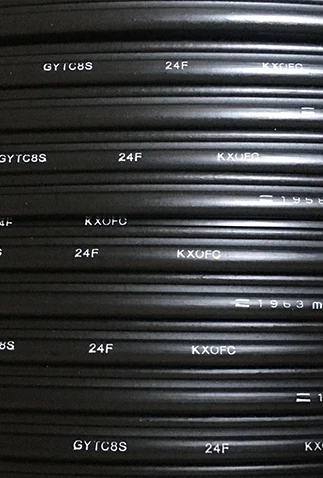
• Standard reel length: 2km/drum or 3km/drum; other lengths are also available.
Our services
1. 24-hour one-on-one online service to ensure efficient support.
2. Thoughtful customer reception from hotel reservation to factory visit.
3. Extremely cautious throughout the process from order confirmation to product shipment.
own brand




Pack and ship


Tips
Fiber optic sensing technology, with its core advantages such as resistance to electromagnetic interference, long-distance transmission, distributed continuous monitoring, and compatibility with optical communication systems, has become a fundamental technology for building a smart society and is widely used in communication network operation and maintenance, oil and gas pipeline monitoring, rail transit perimeter protection, and bridge structural health diagnosis. On June 25th, the CIOE China International Optoelectronic Exposition, in conjunction with C114 Communications Network, held an online seminar entitled "2026 China Optical Communication High-Quality Development Forum – Fiber Optic Intelligent Sensing Technology Special Session."
At the seminar, Zhang Chuanbiao, Senior Researcher of Optical Transmission at China Unicom Research Institute, shared "Application Practice of Integrated Optical Network Sensing Based on Existing Optical Cable Resources." Fiber optic sensing enhances the intelligent operation and maintenance of optical networks. Operators, especially China's three major operators, possess the richest fiber optic network resources and have been continuously researching the integration of optical network communication and sensing (integrated sensing) for many years. Zhang Chuanbiao pointed out that the integrated sensing technology of optical networks expands the function of optical fiber cables from simple data transmission to real-time sensing of various physical quantities such as temperature, vibration, and strain, bringing unprecedented intelligent solutions to many fields such as network operation and maintenance, public safety, and industrial monitoring. This is a revolutionary expansion of the functions of traditional optical fiber communication networks.
Based on the actual situation of existing optical cable resources, Zhang Chuanbiao introduced typical demand scenarios for fiber optic sensing in operator networks: For example, at a subway construction site, optical cables in ducts directly beneath the construction area face significant safety threats, but the original optical cable routing map in the resource system still shows that the optical cables pass through the construction area. How can the actual route of the optical cables be determined to avoid the cables being affected by construction? Another example is a fiber optic splice box in a network segment, where special sealant was injected to fix the splice points, but with seasonal changes, it was found that fiber loss gradually increased and even fiber breaks occurred during actual use. How can the true cause be found? Furthermore, currently, illegal construction around optical cables and external damage to optical cables are frequent, causing significant losses to both operators and users. How can these risks be prevented in advance? All of these typical scenarios involve a key issue: intelligent operation and maintenance of optical cable infrastructure. Data shows that by the end of 2025, the total length of optical cable lines in my country reached 74.99 million kilometers. These optical cable resources not only require operation and maintenance guarantees but can also create higher value through data mining. The value of fiber optic sensing technology is thus highlighted.
Zhang Chuanbiao believes that utilizing the transmission characteristics of optical signals and the scattering characteristics of optical fibers to achieve optical cable sensing can become a new generation of intelligent operation and maintenance methods. The combination of wide-coverage optical cable resources with distributed optical fiber sensing technology can collect high-value sensing data, thereby empowering more application scenarios and creating new business opportunities. For example, the precise positioning of optical cables, monitoring of optical cable operation status, and optical cable environmental sensing reflected in the above examples are all stages where optical fiber sensing technology can demonstrate its capabilities. Zhang Chuanbiao also introduced the application of submarine optical cables. The deployment environment of submarine optical cables is extremely harsh, and optical fiber sensing technology can be used in scenarios such as marine environmental data acquisition and submarine cable fault detection, achieving precise operation and maintenance and safety protection of submarine cable systems.
The standardization of optical network sensing integration is progressing rapidly, with technological innovation driven by standards development. As an emerging technology integrating communication and sensing, the standardization of optical network sensing integration has attracted much attention from the industry.
Currently, domestic and international standards organizations such as CCSA, IMT-2020 (5G), ITU-T, and IEC have conducted a series of related standard studies on optical network sensing integration. Zhang Chuanbiao highlighted the progress of ITU-T's standards: Since proposing the standardization requirement for the integration of optical network communication and sensing in 2023, with the gradual advancement of standard projects, more mature application scenarios will emerge in the future. This requires the industry to pay more attention to the interaction between sensing data and communication, as well as the implementation of standards. Among them, ITU-T G.681 (2025.11) is the first terrestrial DWDM Distributed Fiber Optic Sensing (DFOS) optical interface standard, enabling the coexistence of sensing and communication on the same fiber, and allowing deployment of fiber optic link monitoring without modifying existing network equipment; ITU-T TR.fsc is the world's first report on feedforward fiber optic sensing technology for optical communication networks, focusing on native sensing routes for communication, reusing coherent receiver oDSP and on-network service signals, without adding new dedicated sensing hardware, and supporting intelligent monitoring of trunk/metropolitan area optical cables. In addition, my country has also formulated relevant national standards, forming a series of standards for optical fiber cable maintenance technology.
Looking ahead, fiber optic sensing technology is primarily envisioned for applications such as precise routing, highly reliable optical paths, and real-time acquisition of high-value data. Zhang Chuanbiao concluded by noting that in precise routing scenarios, issues remain, including positioning errors and reliance on human experience; in highly reliable optical paths, there are challenges such as high costs and insufficient integration with existing communication systems; and in real-time acquisition of high-value data, there are issues such as insufficient data density and dependence on algorithms and models for real-time processing. It is evident that the market prospects for integrated optical network sensing are vast, but the industry needs to intensify its efforts to overcome technological bottlenecks and promote standardization. Based on existing abundant optical network resources, low-cost, wide-coverage sensing networks can be constructed, empowering the high-quality development of the digital economy.
Hot Tags: 4 fiber optic cable, China 4 fiber optic cable manufacturers, suppliers, factory, Flat Fiber Optic Cable, G652D Fiber Cable, GYFTY Fiber Optic Cable, Kabel Fo Duct, non metal dielectric optical cable
Technical Characteristics
|
Fiber Count |
2~24 |
|
Loose Diameters |
2.0~2.5mm |
|
Loose Material |
PBT (Polybutylene Terephthalate) |
|
Dielectric Strength Member Material |
FRP & Yarn |
|
Dielectric Strength Member size |
1.0mm (FRP) |
|
Outer Jacket Material |
PE |
|
Nominal Outer Dimensions |
6.0~8.0 mm (±0.3) |
|
Tension Strength (Long-Term /Short-Term) |
600N /1000N /600N |
|
Crush Resistance (Long-Term /Short-Term) |
300 N/100mm 1000 N/100mm |
|
Minimum Bend Radius (Static / Dynamic) |
10 x OD / 20 x OD |
*All above the cable size can be customized.
Previous
Outdoor Fiber Optic CableSend Inquiry


