Fiber Optic Kabel
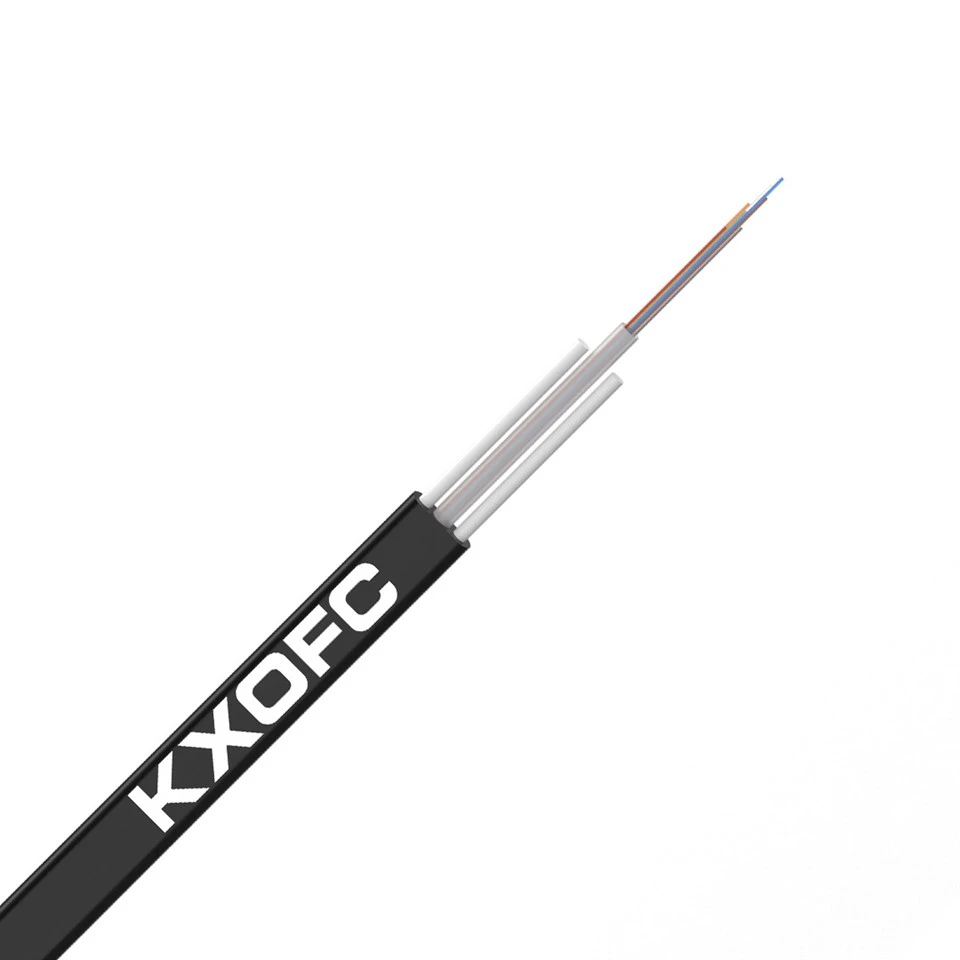
Flat fiber optic cable ,optical fibers are housed in a loose tube that is made of high-modulus plastic and filled with jelly. Two FRP are placed in parallel outside the tube, and a flat-shape PE sheath is extruded.
Description
Technical Parameters
our company
Features
- Light weight and small diameter.
- High tensile strength, also suitable for self-supporting aerial application .
- Excellent lateral pressure resistance and temperature performance.
- All dielectric structure, which avoids conducting lighting to home and improves safety.
*All above the cable size can be customized.
Environmental Characteristics
• Transport/storage temperature: -40℃ to +60℃
Delivery Length
• Standard reel length: 2km/drum or 3km/drum; other lengths are also available.
Factory or trading company?
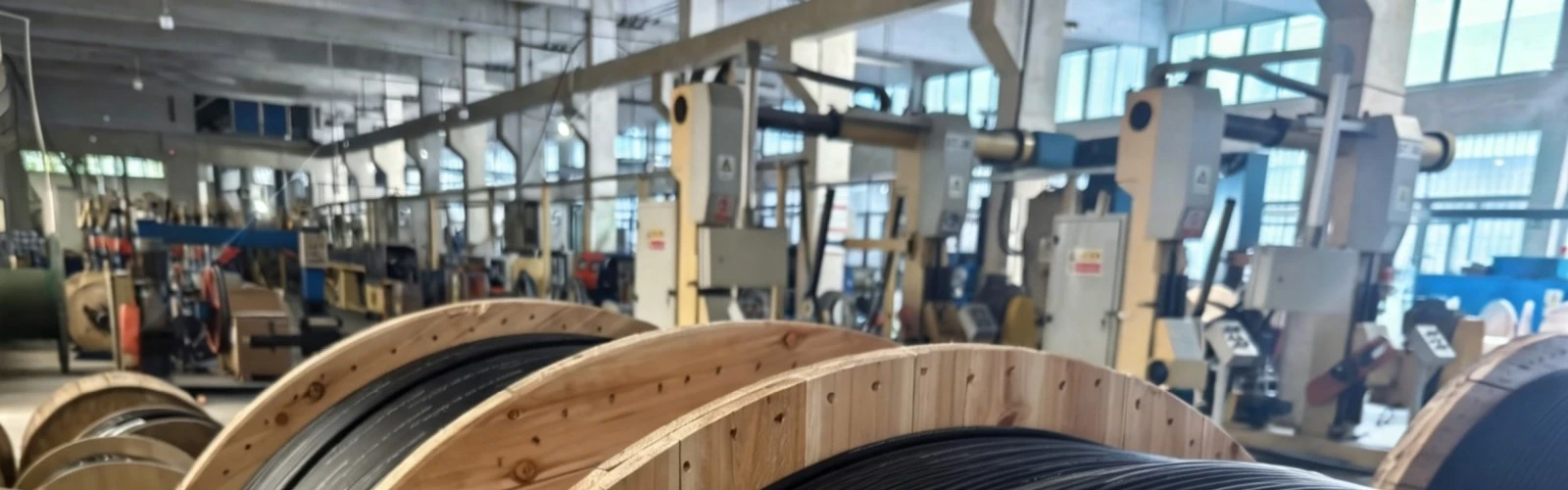
We are a manufacturer in Hangzhou City, Zhejiang province since year 1992, have 30 years' experience in coaxial cable and fiber optic cable, also have our own trading company.
own brand
Pack and ship
Tips
# GYFXBY Outdoor Flat Self-Supporting Single-Tube Optical Cable
## I. Model Letter Breakdown (National Standard Definition)
**G Y F X B Y**
- G: Communication Optical Cable
- Y: Outdoor Use (Outdoor Laying)
- F: Non-metallic All-Dielectric Structure (No Metallic Steel Wire, Lightning Protection)
- X: Flat / Butterfly Cross-Section
- B: Self-Supporting Aerial Dedicated
- Y: Polyethylene (HDPE) Black Outer Sheath
Full Name: **Outdoor Non-metallic Flat Self-Supporting Single-Tube Filled Optical Cable**, commonly known in the industry as **Outdoor Large-Core-Count Butterfly-Shaped Drop Flat Cable, Aerial Drop Flat Optical Cable**, distinguished from ordinary 2-core outdoor drop cable GJYXFCH.
## II. Complete Internal Structure (From Inside to Outside)
1. **250μm Colored Single-Mode Fiber** Optional core count: 2/4/6/8/12 cores (12 cores is the mainstream, commonly used in rural areas and residential communities); standard fiber is G.652D, with optional bend-resistant G.657A2; fiber bundles are uniformly placed in a central loose tube.
2. **PBT Central Loose Tube + Fiber Grout Filling** High hydrolysis-resistant PBT material, internally filled with waterproof and water-blocking grease to isolate moisture and prevent fiber compression; precisely controlled fiber excess length, tensile strength, and no increase in attenuation under high and low temperatures.
3. **Vertical Water-Blocking Tape/Water-Blocking Yarn (Optional)** Wraps the loose tube to block longitudinal water seepage, essential for outdoor rain and wall seepage scenarios.
4. **Parallel FRP Fiberglass Reinforcing Rods on Both Sides (2 rods)** Non-metallic fiberglass reinforced plastic, diameter 1.0~1.6mm; bears all overhead tension, non-metallic, does not attract lightning, preferred for rural areas prone to lightning strikes.
5. **Tear Rope (Cable Opening Line)** Pre-embedded on both sides of the loose conduit, the black PE sheath can be torn longitudinally by hand, no utility knife required, quick outdoor installation.
6. **Black HDPE Flat Outer Sheath** UV resistant, anti-aging, resistant to high and low temperatures, resistant to acid and alkali rainwater; flat "日" shaped one-piece extrusion molding, thin grooves on the sides for easy peeling.
## III. Core Mechanical and Environmental Standard Parameters (National Standard YD/T 1997)
Taking the mainstream **GYFXBY-12 core** as an example:
### 1. External Dimensions
Cross-section: approximately 8.1mm (width) × 4.6mm (thickness), weight ≈35kg/km, much lighter than round overhead optical cables.
### 2. Tensile Strength (Core Aerial Indicator)
- Long-term Allowable Tensile Strength: 400N (No deformation during long-term aerial installation)
- Short-term Damaging Tensile Strength: 1400N (Construction traction, snow and ice overload)
### 3. Compressive Strength
- Long-term Compressive Strength: 1000N/10cm
- Short-term Compressive Strength: 5000N/10cm, not easily damaged by external wall fixing or foot traffic.
### 4. Bending Radius
- Static Laying (Long-term Fixed): ≥15 times the cable thickness
- Dynamic Construction Traction: ≥30 times the cable thickness Bending is only permitted along a flat plane; sharp bends perpendicular to a flat plane are strictly prohibited.
### 5. Operating Temperature Range
Operating: **-40℃ ~ +70℃**; Storage: -40~+70℃, suitable for both frigid northern regions and direct sunlight in southern regions.
### 6. Optical Attenuation (G.652D)
- 1310nm ≤0.4dB/km
- 1550nm ≤0.3dB/km, meeting GPON/10G EPON broadband and monitoring transmission requirements.
## IV. Core Product Advantages
1. **All Non-Metallic Lightning Protection, Specifically for Rural and Mountainous Areas** With no metal components, it eliminates the need for grounding when used on overhead power poles near high-voltage lines or in areas prone to lightning strikes, preventing damage to equipment from induced lightning strikes.
2. **Self-Supporting, No Suspension Wire Required, Significantly Reducing Construction Costs** The FRP panels on both sides have built-in tensile strength, allowing direct hanging from poles and wall supports using wedge clamps, eliminating the need for additional galvanized steel suspension wires. This halves the cost of long-distance wiring to rural homes.
3. **Loose Tube Waterproofing: Superior Outdoor Waterproofing Compared to Ordinary 2-Core Drop Cables** Ordinary outdoor drop cables use tightly bundled optical fibers without fiber paste; GYFXBY loose tubes and water-blocking yarn provide double waterproofing, ensuring stable attenuation even under long-term exposure to rain and outdoor fiber distribution boxes, reducing the risk of water ingress and fiber breakage.
4. **High Core Count for Centralized Installation, Suitable for Contiguous Villages** With up to 12 cores per cable, one cable can serve 12 households, eliminating the need for multiple 2-core drop cables, resulting in neater pole wiring and reduced pole space occupation.
5. **Easy Installation and Stripping** Flat sheath with built-in tear cord eliminates the need for special cable opening tools outdoors, allowing for quick and easy cold splicing of SC connectors on-site; the flat shape conforms to the wall, and the clips ensure secure fastening.
6. **Black HDPE Weather-Resistant and Anti-Aging** The sheath remains crack-free and powder-free after 5-8 years of outdoor exposure, resisting rain, bird damage, and minor chemical corrosion.
## V. Comparison and Differentiation with Two Common Flat Optical Cables
### 1. GYFXBY vs. Ordinary Outdoor 2-Core Drop Cable (GJYXFCH)

### 2. GYFXBY vs Indoor Butterfly Cable GJXH
- GJXH: LSZH low-smoke halogen-free sheath, suitable for indoor corridors, not UV resistant, cannot be exposed to direct sunlight outdoors;
- GYFXBY: Black PE, outdoor only, not flame retardant, strictly prohibited for use in enclosed indoor fire escape routes.
## VI. Standard Application Scenarios
1. **Rural FTTH Connected Overhead Cables (Most Mainstream)** Self-supporting overhead cables on poles in towns and villages, with fiber distribution boxes leading to multiple households, one 12-core cable connecting multiple households, reducing the number of cables on poles.
2. **Villa Area/Self-built Building Exterior Wall Overhead Cabling** Fixed along the exterior walls of multi-household detached buildings, long-term outdoor installation.
3. **Rural Surveillance Aggregation Fiber Optic Cable** Centralized backhaul of multiple outdoor cameras, outdoor pole-mounted overhead cable, significant lightning protection advantages.
4. **Electrical Wiring in Urban-Rural Fringe Areas** Fiber optic cabling is routed from the distribution box to the exterior wall of the building, replacing multiple 2-core drop cables and simplifying wiring.
5. **Short-Distance Shallow-Buried Conduit Installation** Low-voltage wiring in the community is installed in shallow conduits; the flat structure saves conduit space.
## VII. Laying Precautions (Key Prohibitions)
1. Only **planar bending is supported**. Strong bending of the flat cross-section is prohibited, as it can easily crush the loose conduit and damage the optical fiber.
2. The recommended overhead span is ≤80 meters. In areas with heavy snow or ice, shorten it to within 50 meters to avoid overload.
3. Do not directly bury in road surfaces where heavy vehicles are present; without conduit protection, the fiber is easily crushed.
4. The HDPE sheath is not flame-retardant. Its use is strictly prohibited in enclosed spaces such as corridors and basements. Use GJXH for indoor installations.
5. The pulling force during traction must not exceed a long-term value of 400N, and the instantaneous pulling force during construction should not exceed 1400N.
6. Fiber optic cable must be secured using dedicated wedge-shaped self-supporting clamps; do not rely solely on clamping the sheath for support.
## VIII. Example of Complete Model Designation
GYFXBY-12B1
- GYFXBY: Optical cable model
- 12: Number of fiber cores (12 cores)
- B1: G.652D single-mode fiber (B6 represents G.657 bend-resistant fiber)
# Outdoor GYFXBY Flat Self-Supporting Optical Cable: Complete Advantages and Disadvantages
## I. Core Advantages
### 1. All-Non-Metallic Structure, Excellent Lightning Protection
The entire cable has no metal wires or metal sheaths, only an FRP fiberglass reinforcing core; overhead laying in mountainous and rural areas prone to lightning strikes requires no grounding, preventing induced lightning strikes that could damage the optical modem/switch, significantly reducing the lightning strike failure rate compared to round overhead cables with metal components.
### 2. Self-Supporting Tensile Strength, Eliminating the Need for Suspension Cables, Saving Money and Labor in Construction
Long-term allowable tensile force of 400N, it can be directly hung on utility poles and external wall supports without the need for additional galvanized steel strand suspension cables; large-scale wiring in villages and towns significantly reduces auxiliary materials and labor costs, with a maximum single-segment overhead span of 80m.
### 3. Loose Tube + Waterproofing with Fiber Repellent, Strong Outdoor Weather Resistance
The internal PBT loose tube is filled with water-blocking grease, combined with longitudinal water-blocking yarn, allowing for long-term exposure to rain and sun. Compared to ordinary 2-core GJYXFCH tight-buffered cables, it will not experience increased attenuation or fiber breakage due to rainwater penetration, making it suitable for long-term outdoor environments.
### 4. High Core Count Integration, Simplified Pole Cabling
Specifications cover 2/4/6/8/12 cores, allowing a single fiber optic cable to support multiple households and multiple monitoring channels. In rural areas with clustered households and villas, there's no need for stacked thin cables, resulting in a cleaner pole surface, reduced cable space, and easier maintenance.
### 5. Flat, butterfly-shaped structure for easy wall mounting and concealed installation
The thin, flat cross-section conforms to the wall surface, and the clips and wire clamps securely fix the cable, preventing it from falling off easily. It's aesthetically pleasing when running along exterior walls and eaves, and can be installed in narrow cable trays and wall gaps. The built-in tear cord allows for quick manual stripping and efficient on-site cold splicing.
### 6. Resistant to high and low temperatures, suitable for all climates nationwide
Operating temperature -40℃ to +70℃. It won't crack in the harsh winters of the north, and the sheath won't easily powder under the summer sun in the south. The black HDPE outer sheath is UV resistant, rain corrosion resistant, and slightly resistant to bird damage.
### 7. Lightweight, reducing pole load
It is significantly lighter than round overhead optical cables for the same number of cores, and can support the cable on old utility poles and simple exterior wall supports without the need for pole reinforcement.
## II. Disadvantages and Limitations
### 1. Directional Bending: Perpendicular to Flat Surfaces Easily Damages Fiber Optics
It can only be bent along the wide, flat surface. If bent forcefully, stepped on, or squeezed perpendicular to the flat section, the loose tube is easily flattened, causing damage to the fiber. Strict requirements apply to the bending angle during construction and fixing.
### 2. Weaker Compressive Strength Than Circular Stranded Optical Cables
Its single-point concentrated pressure resistance is generally weak. **Direct burial without sheathing is strictly prohibited.** Vehicle traffic and long-term pressure from heavy objects will directly damage the internal loose tube. Protective sheathing must be installed for direct burial.
### 3. Not Flame Retardant, Prohibited for Use in Enclosed Indoor Fire-Fighting Areas
The outer layer is ordinary HDPE polyethylene sheath, lacking low-smoke, halogen-free flame-retardant properties. It cannot replace GJXH indoor butterfly cables in enclosed indoor fire-fighting environments such as corridors, basements, and computer rooms.
### 4. Limited Load Capacity in Large-Span Icing Environments
In areas with severe rain, snow, and icing, it is recommended to shorten the overhead span to within 50m; the added weight from ice and snow accumulation will exceed the 400N long-term tensile strength limit, posing a risk of cable breakage.
### 5. Poor Smoothness of Long-Distance Pulling in Pipes
Flat cross-section cables experience greater dragging resistance when turning or turning in ducts than round optical cables. Long-distance duct laying is not as smooth as with round stranded optical cables; round cables should be preferred for long duct routes.
### 6. Higher Cost per Cable than 2-Core Drop Cable
For the same single-household wiring scenario, the purchase price per meter of GYFXBY is higher than that of GJYXFCH; cost can only be amortized when multiple households are centrally wired; it is uneconomical for short-distance single-household installations.
### 7. Unsuitable for Heavy-Duty Scenarios
Only suitable for overhead, shallow wall laying, and shallow burial for short-distance installations; unsuitable for mines, heavy-duty factory areas, and roads with heavy vehicle traffic due to insufficient protection level. ## III. Summary of Applicability and Trade-offs
✅ GYFXBY is preferred for: rural areas with frequent minefields, large-scale overhead wiring, multiple households with concentrated exterior wall wiring, outdoor surveillance convergence, and environments exposed to prolonged rain.
❌ GYFXBY is not recommended for: short access points within 50 meters for single households, indoor corridor wiring, long-distance main pipelines, vehicles directly buried in the road surface, and extremely icy and cold mountainous areas.
Hot Tags: fiber optic kabel, China fiber optic kabel manufacturers, suppliers, factory, Flat Fiber Optic Cable, G652D Fiber Cable, GYFTY Fiber Optic Cable, Kabel Fo Duct, non metal dielectric optical cable
Technical Characteristics
| Fiber Count | 2~24 |
| Loose Diameters | 2.0mm |
| Loose Material | PBT (Polybutylene Terephthalate) |
| Dielectric Strength Member Material | FRP |
| Dielectric Strength Member Size | 1.8 / 2.0 mm |
| Outer Jacket Material | HDPE |
| Nominal Outer Dimensions | 7.3 mm x 4.2 mm (±0.3) |
|
Tension Strength (Long-Term /Short-Term) |
2400N/6000N |
|
Crush Resistance (Long-Term /Short-Term) |
300 N/100mm 1000 N/100mm |
| Minimum Bend Radius (Static / Dynamic) | 10 x OD / 20 x OD |
*All above the cable size can be customized.
Previous
No InformationNext
G652D Fiber CableSend Inquiry


