

Flat Fiber Cable
Flat fiber optic cable ,optical fibers are housed in a loose tube that is made of high-modulus plastic and filled with jelly. Two FRP are placed in parallel outside the tube, and a flat-shape PE sheath is extruded.
Description
Technical Parameters
our company
Features
- Light weight and small diameter.
- High tensile strength, also suitable for self-supporting aerial application .
- Excellent lateral pressure resistance and temperature performance.
- All dielectric structure, which avoids conducting lighting to home and improves safety.
*All above the cable size can be customized.
Environmental Characteristics
• Transport/storage temperature: -40℃ to +60℃
Delivery Length
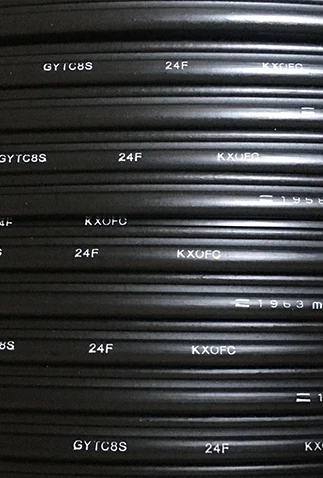
• Standard reel length: 2km/drum or 3km/drum; other lengths are also available.
Factory or trading company?
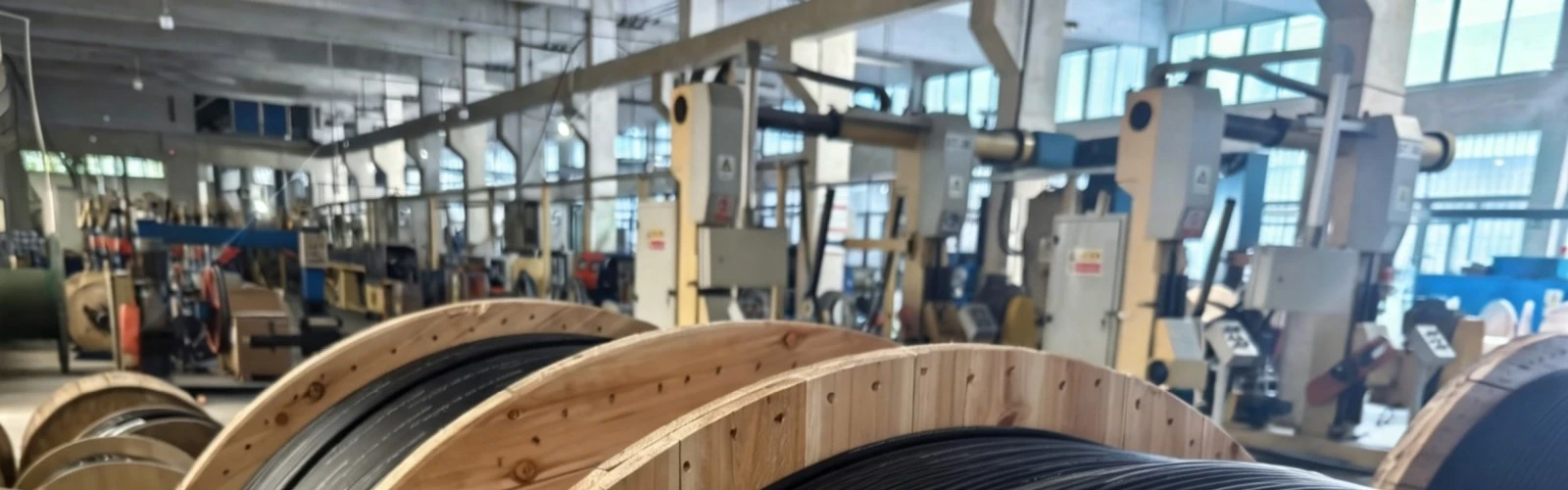
We are a manufacturer in Hangzhou City, Zhejiang province since year 1992, have 30 years' experience in coaxial cable and fiber optic cable, also have our own trading company.
own brand




Pack and ship


Tips
Development Prospects of Space-Division Multiplexing Optical Fibers and Hybrid Optical-Electrical Cables
1. Space-Division Multiplexing (SDM) Optical Fibers (mainly multi-core and few-mode fibers)
Core Value
Space-division multiplexing optical fibers create extra spatial transmission channels via multi-core and few-mode structures, breaking the inherent capacity limit of conventional single-mode fibers and greatly increasing single-fiber transmission capacity. They serve as a key technology for next-generation ultra-high-speed optical networks to meet the extreme bandwidth demands of AI computing networks, transoceanic submarine cables and data center interconnections.
Global & domestic progress: Major trials have been carried out by Google & NEC, NICT, NTT, China Information and Communication Technologies, YOFC and Hengtong Optic-Electric. China's overall R&D level is aligned with the international frontier. ITU-T SG15 has launched the G.sup.G.65x standardization project, focusing first on multi-core fiber submarine cable specifications, while CCSA also conducts related domestic research projects.
Primary application scenarios: ultra-large-capacity submarine cables, hyperscale AI data center interconnections, DCI links and backbone trunk networks, especially for computing hubs with tight pipeline resources and massive bandwidth pressure, with future extension to 6G transport networks.
Key Challenges
Immature and expensive supporting devices, including multi-core amplifiers, array transceivers and MIMO processing chips; severe crosstalk and nonlinear interference degrade long-distance transmission quality.
Incomplete global standards, incompatible operation & maintenance systems with legacy single-mode fiber networks, and high system power consumption.
Poor economic efficiency for universal large-scale deployment, unable to fully replace conventional single-mode fibers in the short term.
Prospect
SDM fibers have promising long-term potential as a core ultra-high-capacity transmission technology, yet they will follow a gradual commercialization path rather than immediate full-scale replacement. Initial large-scale deployment will focus on submarine cables and AI data center interconnections, then expand to other high-bandwidth scenarios. They will form a complementary architecture with ultra-low-loss single-mode fibers to support terabit-level optical transmission, requiring breakthroughs in key devices, global standardization and crosstalk suppression.
2. Hybrid Optical-Electrical Cables
Core Value
Hybrid optical-electrical cables integrate optical fibers and electrical conductors to realize simultaneous high-speed data transmission and remote power supply within one cable. They reduce redundant cabling, save pipeline space, shorten construction cycles and cut overall costs. They are ideal for edge computing nodes, 5G base stations, data center rooms, industrial networks and smart grid systems requiring integrated power and communication infrastructure.
Key scenarios: 5G fronthaul networks, AI data center cabling, industrial internet, smart railways, smart grids, smart city surveillance and remote edge computing sites.
Evolution direction: high-density integration, extreme-environment resistance, EMC shielding, embedded sensing, to support F5G, 5G-A/6G and full-edge optical networks.
Key Challenges
Electrical safety risks: electromagnetic interference, heat damage to fibers, fire hazards and special construction & maintenance requirements.
Structural trade-offs: balancing power capacity, optical performance, mechanical flexibility and long-term reliability (aging, bending loss, corrosion).
Fragmented specifications and low versatility, limiting mass production.
Prospect
Hybrid optical-electrical cables will maintain steady growth as a mainstream special cable for access networks and edge computing infrastructure, driven by full optical computing networks, 5G-A and new power system construction. However, they are not suitable for ultra-long-haul backbone transmission. Further standardization, shielding design and reliability improvement will support their long-term development.
Overall Summary
SDM optical fibers: core long-haul ultra-high-capacity transmission solution, starting with high-end special scenarios and gradually popularizing, solving backbone bandwidth bottlenecks.
Hybrid optical-electrical cables: essential access/edge special cables, focusing on integrated power-and-communication scenarios, not backbone trunks.
The two technologies serve different network layers and complement each other to build a full optical network for AI computing infrastructure.
Hot Tags: flat fiber cable, China flat fiber cable manufacturers, suppliers, factory, Flat Fiber Optic Cable, G652D Fiber Cable, GYFTY Fiber Optic Cable, Kabel Fo Duct, non metal dielectric optical cable
Technical Characteristics
| Fiber Count | 2~24 |
| Loose Diameters | 2.0mm |
| Loose Material | PBT (Polybutylene Terephthalate) |
| Dielectric Strength Member Material | FRP |
| Dielectric Strength Member Size | 1.8 / 2.0 mm |
| Outer Jacket Material | HDPE |
| Nominal Outer Dimensions | 7.3 mm x 4.2 mm (±0.3) |
|
Tension Strength (Long-Term /Short-Term) |
2400N/6000N |
|
Crush Resistance (Long-Term /Short-Term) |
300 N/100mm 1000 N/100mm |
| Minimum Bend Radius (Static / Dynamic) | 10 x OD / 20 x OD |
*All above the cable size can be customized.
Previous
6 Core Fiber Optic CableNext
Aramid CableSend Inquiry


