

Aramid Yarn Fiber Optic Cable
Strength Members: 2 × FRP + Aramid Yarn
Outer Diameter: 6.0–8.0 mm
Tensile Strength: 600 N / 1000 N
Crush Resistance: 300 / 1000 N/100 mm
Standard Reel Length: 2 km / 3 km
Description
Technical Parameters

Aramid Yarn Fiber Optic Cable is available in 2–24 fiber configurations and uses a non-metallic uni-tube construction. The cable consists of optical fibers, a PBT loose tube, two FRP strength members, aramid yarn reinforcement and a PE outer jacket.
The standard cable has a nominal outer diameter of 6.0–8.0 mm, depending on fiber count and cable configuration. Mechanical specifications include 600 N long-term tensile strength, 1000 N short-term tensile strength, 300 N/100 mm long-term crush resistance and 1000 N/100 mm short-term crush resistance.
Cable fiber count, outer diameter, cable printing, reel length and packaging can be specified according to project requirements.
Cable Construction
Optical Fiber
The optical fibers are housed inside the PBT loose tube. Fiber count is available from 2 to 24 fibers according to the required network configuration.
PBT Loose Tube
The PBT loose tube surrounds the optical fibers and is filled with compound. The tube provides mechanical protection for the fibers and accommodates fiber movement caused by temperature changes.
FRP Strength Members
Two FRP strength members are positioned along the cable core. FRP provides tensile reinforcement while maintaining a fully non-metallic cable construction.
Aramid Yarn
Aramid yarn is applied around the cable core as additional tensile reinforcement. The material provides mechanical reinforcement without introducing conductive metal components into the cable structure.
PE Outer Jacket
The outer jacket is made of PE and forms the external protective layer of the cable. The standard construction is suitable for outdoor cable routing where PE jacketing and non-metallic reinforcement are required.

Key Advantages
Non-Metallic Cable Construction
The cable uses FRP and aramid yarn as reinforcement members instead of metallic strength components. This dielectric construction makes the cable suitable for communication network environments where a non-metallic structure is preferred.
Aramid Yarn + FRP Reinforcement
The combination of aramid yarn and two parallel FRP members provides mechanical reinforcement around the loose tube. The current cable specification supports a tensile strength of up to 1000N under short-term conditions.
Compact and Lightweight Structure
With a nominal outer diameter of 6.0–8.0 mm, the cable maintains a compact profile for easier handling and installation in suitable duct and outdoor network applications.
Controlled Crush Resistance
The cable specification provides 300 N/100 mm long-term and 1000 N/100 mm short-term crush resistance, helping protect the internal optical components during transportation and installation.
Flexible Fiber Count Options
The cable is available from 2 to 24 fibers, allowing distributors and project contractors to select configurations according to network capacity requirements.
Customized Cable Specifications
Cable dimensions can be customized according to project requirements. Reel lengths can also be supplied beyond the standard 2 km and 3 km options.
Product Performance

FRP and aramid yarn are used as non-metallic reinforcement components in the cable.
For long-term loading, the tensile strength is 600 N, while for short-term loading, it is 1000 N. The mechanical load capability of the chosen cable construction during handling and installation is specified by these numbers.
For long-term loading, the standard crush resistance is 300 N/100 mm; for short-term loading, it is 1000 N/100 mm.
10 × cable OD is the minimum static bend radius. 20 × cable OD is the minimum dynamic bend radius.
Before production, the final cable configuration and order specification should be compared to the applicable mechanical values.
Applications

Communication Ducts
The compact cable construction can be used for optical fiber routes installed through suitable communication ducts.

Outdoor Telecom Networks
The PE jacket and non-metallic reinforcement structure are suitable for outdoor fiber optic network construction where a dielectric cable is required.

Access Network Distribution
2–24 fiber configurations provide options for different access network distribution requirements.

Fiber Distribution Routes
The cable can be supplied in different fiber counts and dimensions for fiber distribution and connection sections within optical communication networks.
Why Choose Kexin for Fiber Optic Cable Supply?
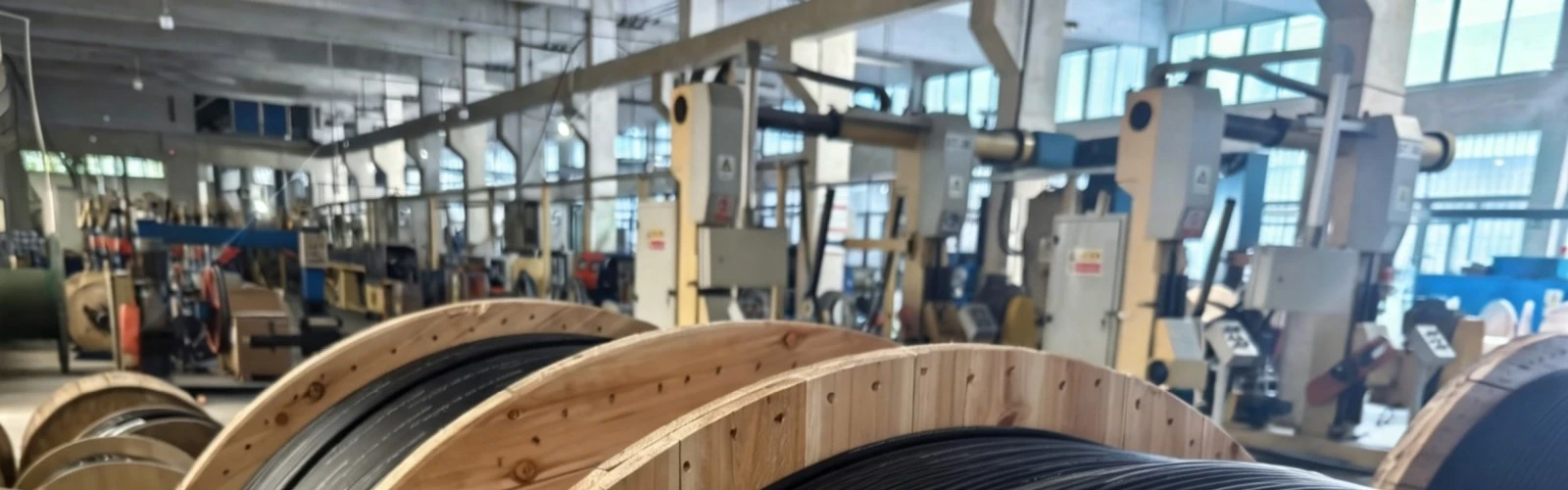
Manufacturing Process
Raw Material
Fiber Processing
Cable Stranding
Sheathing
Optical Testing
Mechanical Testing
Packing
Quality Control
Quality inspection covers both optical and mechanical characteristics of the finished cable.
The production and inspection process can include:
Optical fiber inspection
Loose tube dimensional inspection
Cable diameter measurement
Jacket thickness inspection
Tensile strength testing
Crush resistance testing
Bend performance verification
Finished cable appearance inspection
Reel length verification
Final packing inspection
own brand


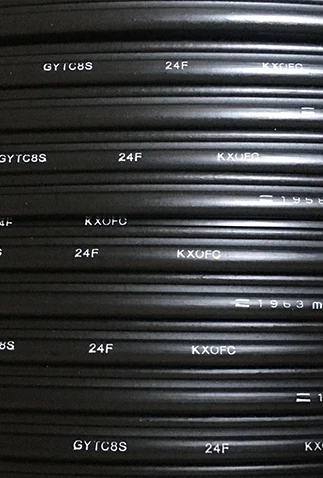


Pack and ship


FAQ
Q: What fiber counts are available for this cable?
A: The cable is currently available with 2 to 24 fibers. Other configurations can be discussed according to project requirements.
Q: What materials are used for the strength members?
A: The cable uses FRP and aramid yarn as non-metallic reinforcement members.
Q: What is the standard cable diameter?
A: The nominal outer diameter is 6.0–8.0 mm ±0.3, depending on the cable configuration.
Q: What reel lengths are available?
A: Standard reel lengths are 2 km per drum and 3 km per drum. Other lengths are available according to customer requirements.
Please provide the required fiber count, cable length, application, estimated quantity, destination market and reel requirements when requesting a quotation.
we can confirm the available cable configuration, technical specifications, production requirements, packaging and delivery arrangement based on the project information.
Hot Tags: aramid yarn fiber optic cable, China aramid yarn fiber optic cable manufacturers, suppliers, factory, all dielectric G657A1 cable, dielectric aerial fiber cable, dielectric low attenuation fiber cable, Flat Fiber Optic Cable, G652D Fiber Cable, non metal dielectric optical cable
Technical Characteristics
|
Fiber Count |
2~24 |
|
Loose Diameters |
2.0~2.5mm |
|
Loose Material |
PBT (Polybutylene Terephthalate) |
|
Dielectric Strength Member Material |
FRP & Yarn |
|
Dielectric Strength Member size |
1.0mm (FRP) |
|
Outer Jacket Material |
PE |
|
Nominal Outer Dimensions |
6.0~8.0 mm (±0.3) |
|
Tension Strength (Long-Term /Short-Term) |
600N /1000N /600N |
|
Crush Resistance (Long-Term /Short-Term) |
300 N/100mm 1000 N/100mm |
|
Minimum Bend Radius (Static / Dynamic) |
10 x OD / 20 x OD |
*All above the cable size can be customized.
Previous
No InformationSend Inquiry
You Might Also Like


