
Armored Fiber Optic Cable
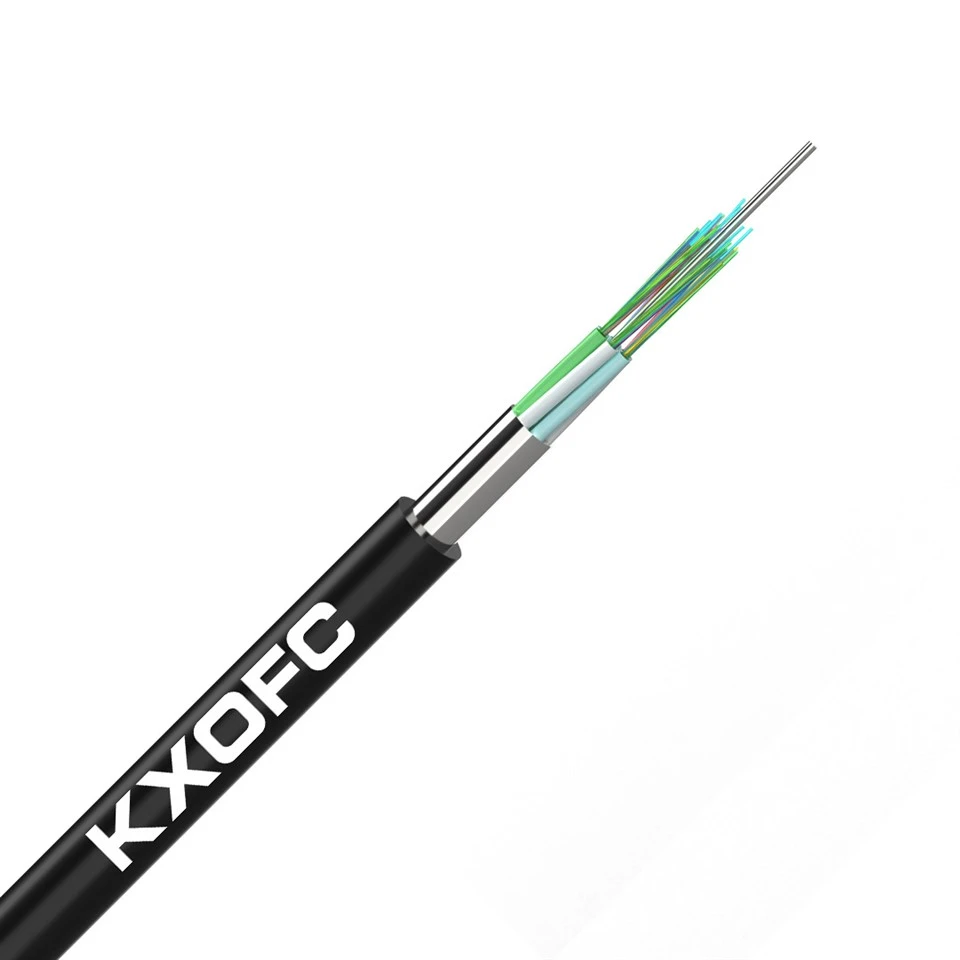
Outdoor armored fiber optic cable, armored fiber optic cable are housed in loose tubes that made of high-modulus plastic and filled with filling compound. The tubes (and fillers) are stranded around a central strength member and surrounded with Aluminum tape to form a cable core. An extremely outer PE sheath is extruded outside the core.
Description
Technical Parameters
our company
Features
- Single steel wire center strengthening cable core.
- Stranded multi-tubes with jelly ensure the cable waterproof performance.
- Coated with APL moisture barrier
- PE sheath has excellent UV radiation resistance.
Environmental Characteristics
• Transport/storage temperature: -40℃ to +60℃
Delivery Length
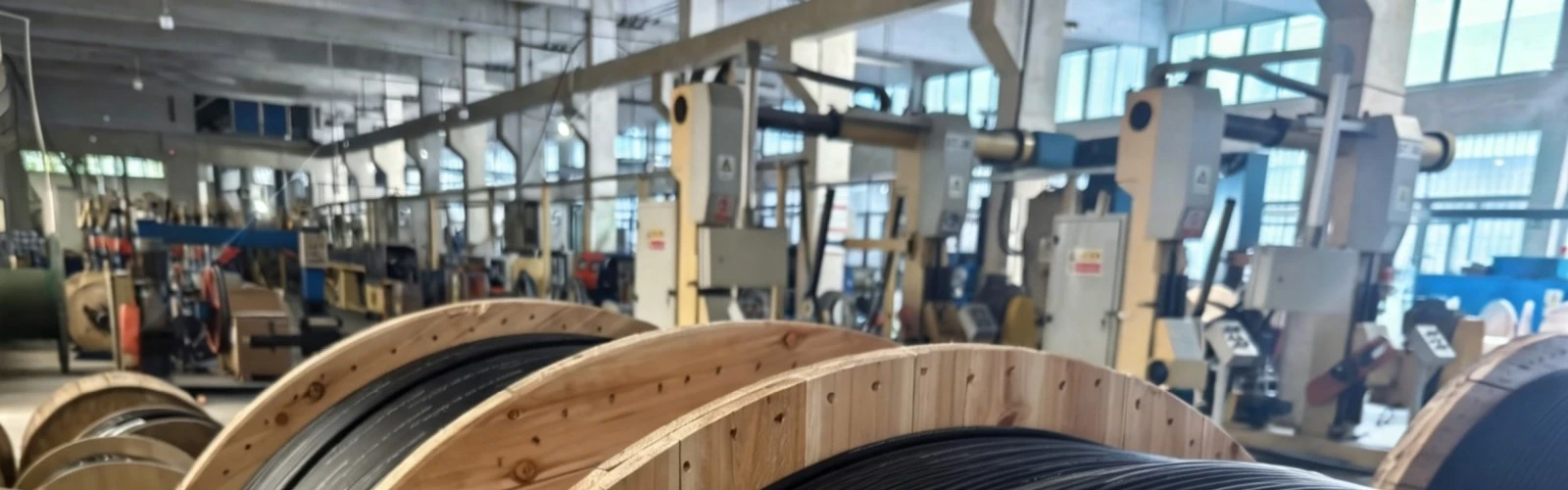
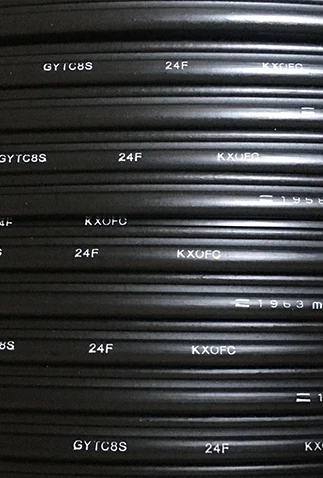
• Standard reel length: 2km/drum or 3km/drum; other lengths are also available.
Can we get free samples?
Yes, free sample can be sent. New customers are expected to pay for the freight, it will deduct from future order.
own brand




Pack and ship


Tips
Optical Fiber: The Underground "Nerve Endings"
Distributed Fiber Optic Sensing (DFOS) offers an elegant solution. A single standard single-mode optical fiber, only as thick as a human hair, can simultaneously function as a thermometer (DTS), vibration sensor (DAS), and strain gauge (RFS-DSS)-covering the entire wellbore, with each meter serving as an independent measuring point. It requires no power supply, no electronic components, and its temperature resistance far exceeds that of any silicon-based chip.
In 2018, the U.S. Department of Energy selected Milford, Utah, as the final experimental site for FORGE (Frontier Observatory for Research in Geothermal Energy). This multi-million dollar underground laboratory carries a core mission: to move EGS from experimental technology to commercial reality. FORGE's two wells-16A (injection well) and 16B (production well)-have drilled into a granite substrate exceeding 8,000 feet (approximately 2,438 meters).
Since 2020, numerous hydraulic fracturing, cyclic testing, and microseismic monitoring tests have been conducted here, resulting in over 100 high-level academic papers. However, one question remains unresolved.
Core Pain Point: Optical Fibers "Can't Survive" in Geothermal Wells
The FORGE team made multiple attempts to deploy permanent optical fibers in well 16B-fixing the fibers to the outside of the casing or lowering them into the well via steel cables. The results were frustrating. According to a citation in a 2026 Stanford paper by the Texas Tech team (Ajo-Franklin et al., 2025), there have been multiple fiber deployment failures at the FORGE site. At least one was attributed to manufacturing defects, but most data suggests the failures were caused by a combination of high-temperature environments and extreme conditions from fracturing/circulation operations. This is a common pain point across the entire geothermal industry: optical fibers can survive in geothermal wells, but long-term survival is difficult.
There are three reasons for this: **Temperature**: The FORGE reservoir temperature exceeds 200°C. The temperature resistance limit of ordinary optical fiber coatings is between 150-300°C, but under long-term exposure to high temperature, high pressure, and water vapor environments, microcracks will continue to propagate. **Chemical corrosion:** Geothermal fluids contain dissolved mineral salts, hydrogen sulfide, and other corrosive substances that attack the glass surface of the optical fiber. **Mechanical stress:** Hydraulic fracturing and circulating injection/production cause huge strain gradients near the wellbore-the optical fiber experiences drastic changes in hundreds of micro-strains over millimeter-scale distances. Even more problematic: if the optical fiber fails, it cannot be replaced. Permanent installation means the fiber is cemented to the outside of the casing or tangled in the tubing and cannot be removed. Replacing an optical fiber is equivalent to drilling a new well.
At the end of this Stanford paper, the research team outlined their next steps: improving the gel formulation, redesigning the strain-coupled fiber, and acquiring longer time-series data in the next cycle of testing. All these improvements point in the same direction-to make the fiber last longer in geothermal wells, measure more accurately, and replace it more quickly. But looking beyond the paper, the metaphor is much broader than the data itself. Humanity's "visibility" to the underground determines how much energy we can extract from it. The oil industry spent 100 years developing downhole sensors to their limits-but that was to extract a non-renewable resource. The geothermal industry has a different mission: to unlock an energy source that will never run out as long as the Earth continues to cool. A fiber that can be replaced at any time is the first "nerve" leading to that future.
Hot Tags: armored fiber optic cable, China armored fiber optic cable manufacturers, suppliers, factory, anti rodent biting fiber cable, Anti Rodent Fiber Optic Cable, Armored Fiber Optic Cable Single Mode, GYXTW Optical Fiber Cable 12 core, Outdoor Armored Fiber Optic Cable, Single Mode Armored Fiber Optic Cable
Technical Characteristics
|
Fiber Count |
12~288 core |
|
Loose Diameters |
2.1mm |
|
Loose Material |
PBT(Polybutylene Terephthalate) |
|
Central Strength Member |
Steel wire |
|
Armored |
Aluminum tape |
|
Outer Jacket Material |
PE |
|
Nominal Outer Dimensions |
9.0~15.0 mm (±0.3) |
|
Tension Strength (Short-Term / Long-Term) |
600N/1500N |
|
Crush Resistance (Short-Term / Long-Term) |
1,000 N/100mm 300 N/100mm |
|
Minimum Bend Radius (Static / Dynamic) |
10 x OD / 20 x OD |
*All above the cable size can be customized.
Previous
Single Mode Fiber Optic CableNext
Optic CableSend Inquiry


