Adss Fiber
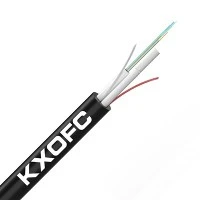
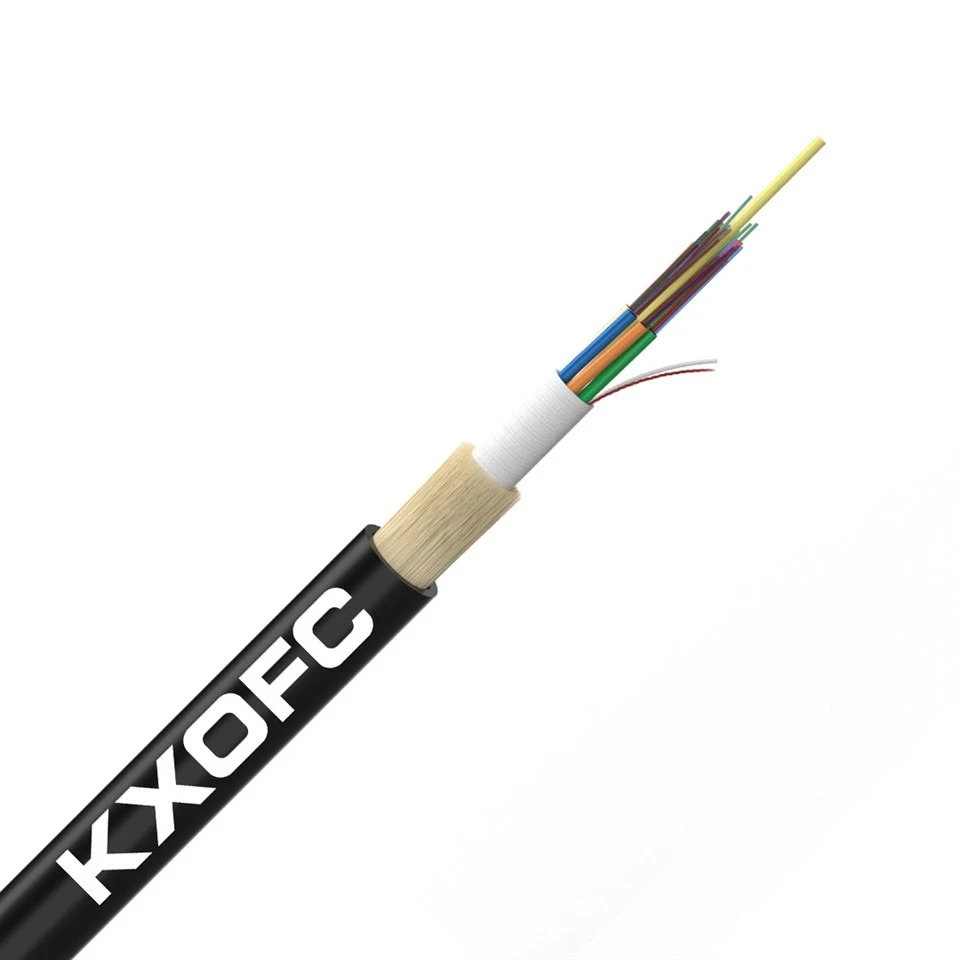
ADSS 100M SPAN 1+6 Single jacket adss fiber aerial optical fiber cable,all dielectric self-supporting optical fiber cable adopts a loose-tube stranded structure. Optical fiber is placed in a loose tube made of high-modulus plastic, and the tube is filled with water-blocking fiber compound. The loose tubes (and filing ropes) are stranded around a non-metallic central strength member fiber reinforced plastic (FRP) to form a compact circular cable core. Aramid yarn is stranded around the cable core as a tensile strength member, and finally, a polyethylene (PE) or anti-tracking (AT) outer sheath is extruded to complete the entire cable.
Description
Technical Parameters
our company
Features
- No metallic components: eliminates issues of lightning strikes, electromagnetic induction, and ground current, making it suitable for areas with high electric fields and frequent lightning.
- Light weight: minimizes additional load on poles and towers, allowing direct installation on power line poles/towers or existing communication pole lines.
- Triple water-blocking protection (loose-tube stranding + water-blocking fiber compound + dry water-blocking tape):prevents moisture and condensation.
- PE/AT outer sheath: resistant to UV radiation, tracking, and aging, adaptable to outdoor environments ranging from-40℃ to +70℃.
Environmental Characteristics
• Transport/storage temperature: -40℃ to +60℃
Delivery Length
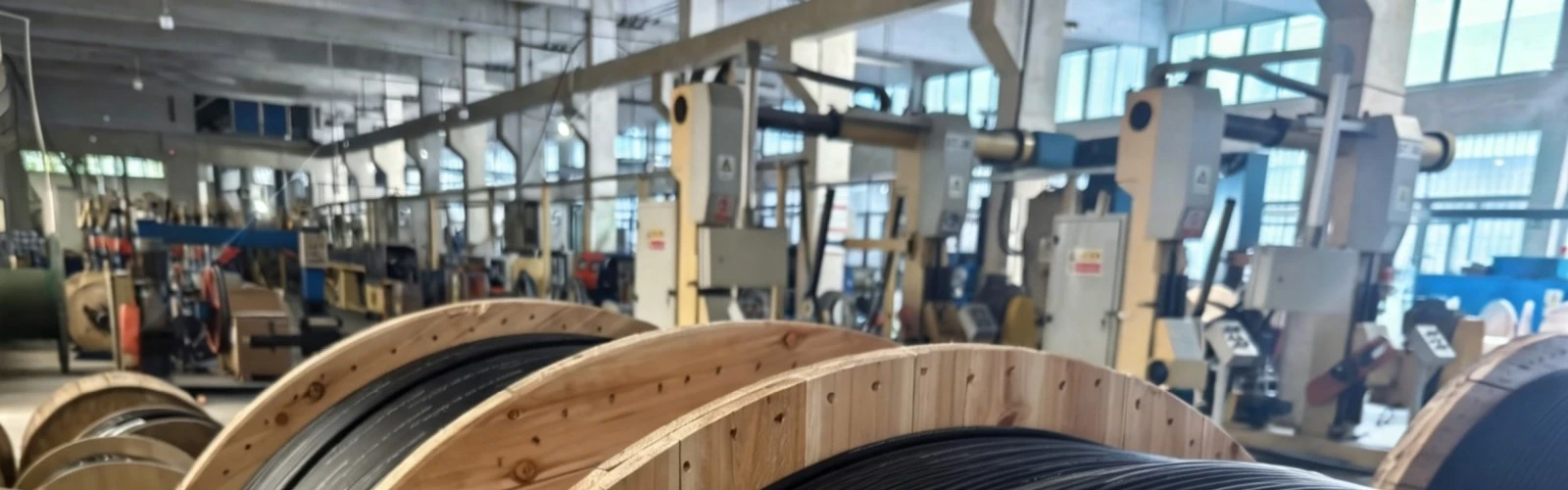
• Standard reel length: 3km/drum; other lengths are also available.
Standard order payment
- Payment term: T/T, L/C, D/P...
- For small orders: credit cards, Western Union money transfer and PayPal are all accepted.
- For other complex payment methods, further discussion is possible.
own brand




Pack and ship


Tips
Failure Mechanism and Quantitative Operation and Maintenance Model of ADSS Optical Cable Sheath Cracking in Tropical Coastal Environment
This study addresses the issue of premature cracking of the sheath of all-dielectric self-supporting (ADSS) optical cables under extreme conditions of high temperature, high humidity, and strong ultraviolet radiation in tropical coastal areas. Using a 216-core ADSS adss fiber commissioned in Pattaya, Thailand in 2020 as an example, a systematic failure analysis was conducted, incorporating on-site fault morphology, regional environmental parameters, material properties, and construction techniques. Results show that residual stress from small-radius bending during construction provides the mechanical basis for crack initiation. Extreme ultraviolet radiation and high temperature induce photo-oxidative and thermo-oxidative aging of the polyethylene sheath material, leading to a significant decrease in material toughness. High-humidity salt spray further accelerates microcrack propagation, forming a typical stress-environment synergistic coupling failure mechanism. Based on measured annual average temperature, humidity, and ultraviolet radiation data from Pattaya, a quantitative operation and maintenance inspection model for the environmental aging acceleration coefficient was constructed to accurately calculate the inspection cycle of optical cables under different operating conditions and construction defects. Based on the model, a tiered operation and maintenance strategy and full-process quality control measures are proposed. The research results can provide theoretical basis and engineering reference for the construction management, aging fault assessment and standardized operation and maintenance of ADSS optical cables in tropical coastal areas.
All-dielectric self-supporting ADSS adss fiber possess advantages such as being metal-free, resistant to electromagnetic interference, allowing for large spans, and facilitating construction, making them widely used in high-voltage power communication transmission networks. The outer sheath of the optical cable is mostly made of polyethylene polymer material, serving as the core protective structure against external ultraviolet radiation, temperature changes, moisture, and mechanical stress. Its performance directly determines the overall lifespan and communication stability of the optical cable. Compared to temperate inland environments, tropical coastal areas experience multiple extreme conditions, including strong ultraviolet radiation, year-round high temperatures, high humidity, and salt spray corrosion, which significantly accelerate the aging of the polyethylene sheath. Current project feedback shows that ADSS adss fiber in Southeast Asian coastal areas often experience premature failure, such as sheath powdering and cracking, within 5-6 years of operation. In severe cases, this can lead to fiber optic water leakage and abnormal transmission attenuation, threatening the safe and stable operation of power communication systems. Current domestic research largely focuses on single-environment aging mechanisms or material formulation optimization, with limited systematic analysis of the coupled failure mechanism of "construction stress + extreme environment." Furthermore, there is a lack of quantitative operation and maintenance inspection standards adapted to tropical coastal conditions, resulting in maintenance work relying heavily on experience and lacking data support. Based on a real-world failure case in Pattaya, Thailand, this article combines on-site photos of the failure morphology, construction compliance verification, and quantitative parameters of the regional environment to systematically reveal the coupling failure mechanism of sheath cracking. It also constructs a quantitative model of inspection cycle that can be applied in engineering, forming a complete technical system from source prevention and control to construction management and precise operation and maintenance.
Hot Tags: adss fiber, China adss fiber manufacturers, suppliers, factory, Adss Aerial Fiber Optic Cable, Adss Fiber Optic Cable, ASU central tube fiber cable, ASU loose tube fiber cable, mini ADSS loose tube cable, Self Supporting Aerial Cable
Technical Characteristics
| Fiber Count | 12~72 |
| Structure | 1+6 |
| Span | 100M |
| Loose Diameters | 2.0 mm |
| Loose Material | PBT (Polybutylene Terephthalate) |
| Central Strength Member | FRP |
| Strength Member | Aramid Yarn |
| Outer Jacket Material | HDPE |
| Nominal Outer Diameter | 9.0mm (±0.3) |
|
Tension Strength (Long-Term /Short-Term) |
3000N/8000N |
|
Crush Resistance (Long-Term /Short-Term) |
300 N/1000mm |
| Minimum Bend Radius (Static / Dynamic) | 10 x OD / 20 x OD |
*All above the cable size can be customized.
Previous
Cable AdssNext
Adss KabelSend Inquiry