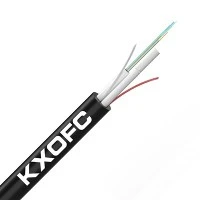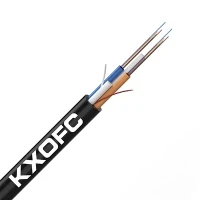

Adss Aerial Fiber Optic Cable
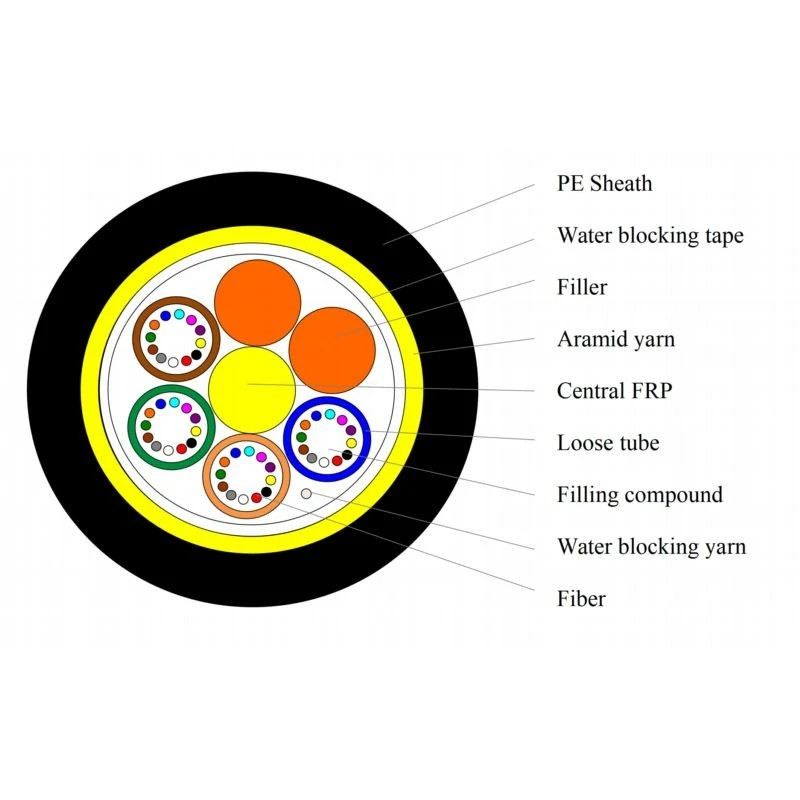
22 ADSS-single
Adss Aerial Fiber Optic Cable
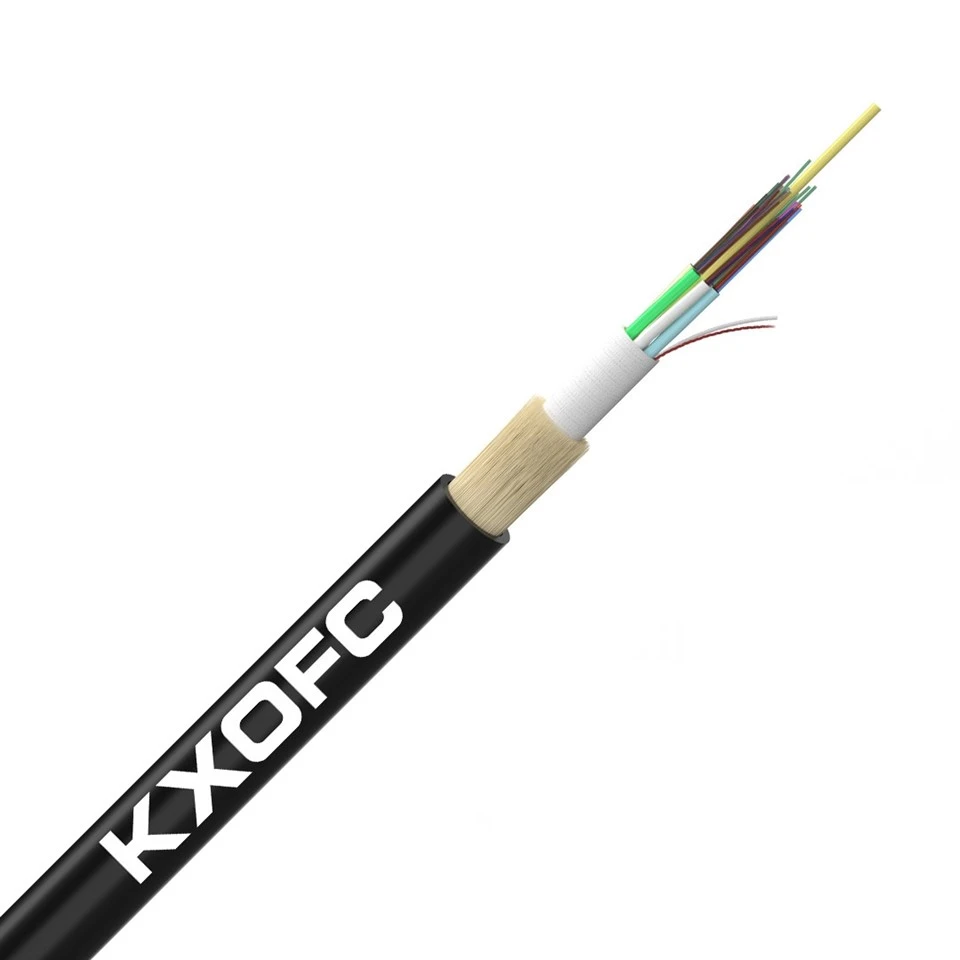
ADSS 100M SPAN 1+6 Single jacket aerial optical fiber cable,all dielectric self-supporting optical fiber cable adopts a loose-tube stranded structure. Optical fiber is placed in a loose tube made of high-modulus plastic, and the tube is filled with water-blocking fiber compound. The loose tubes (and filing ropes) are stranded around a non-metallic central strength member fiber reinforced plastic (FRP) to form a compact circular cable core. Aramid yarn is stranded around the cable core as a tensile strength member, and finally, a polyethylene (PE) or anti-tracking (AT) outer sheath is extruded to complete the entire cable.
Description
Technical Parameters
our company
Features
- No metallic components: eliminates issues of lightning strikes, electromagnetic induction, and ground current, making it suitable for areas with high electric fields and frequent lightning.
- Light weight: minimizes additional load on poles and towers, allowing direct installation on power line poles/towers or existing communication pole lines.
- Triple water-blocking protection (loose-tube stranding + water-blocking fiber compound + dry water-blocking tape):prevents moisture and condensation.
- PE/AT outer sheath: resistant to UV radiation, tracking, and aging, adaptable to outdoor environments ranging from-40℃ to +70℃.
Environmental Characteristics
• Transport/storage temperature: -40℃ to +60℃
Delivery Length
• Standard reel length: 3km/drum; other lengths are also available.
Standard order payment
- Payment term: T/T, L/C, D/P...
- For small orders: credit cards, Western Union money transfer and PayPal are all accepted.
- For other complex payment methods, further discussion is possible.
own brand




Pack and ship


Tips
**Installation Construction Technology and Safety Specifications for Aerial Optical Cables**
An aerial optical cable is a method of installation where the cable is supported by poles and suspended via a messenger wire. This method offers advantages such as fast construction speed, low investment cost, and convenient maintenance and inspection. It is widely used in access networks, rural grid upgrades, and on hilly and plain sections of trunk lines. However, aerial optical cables are long-term exposed to the natural environment, significantly affected by wind loads, ice loads, and temperature variations. Furthermore, they have complex spatial relationships with facilities such as power lines, roads, and railways, imposing stringent requirements on construction technology and safety control.
After installation, the aerial optical cable should lie naturally flat and straight, and should remain free from tension, stress, twisting, and mechanical damage. During the laying process, the following points should be noted:
- A designated person should direct the cable payout process.
- The reel axle should be kept horizontal to prevent the reel from tilting.
- Payout signals must be clear and unobstructed; work should stop immediately if any abnormality is detected.
The installation of aerial optical cables is a comprehensive engineering task involving multiple risks, including working at heights, electrical safety, and traffic protection. The key construction technical points can be summarized by the following core principles:
- **Survey before construction**: A load zone classification and route re-measurement must be conducted before construction. The strength of existing pole lines must be verified to ensure structural safety.
- **The messenger wire is the foundation**: The selection of the messenger wire type, installation quality, and sag control directly determine the long-term operational reliability of the aerial optical cable.
- **Standardize lashing**: The spacing between cable lashing brackets should be 500mm. The brackets must be of the correct specification and uniform in direction. This, combined with expansion/contraction.Keep on every 1st to 3rd pole, ensures the cable experiences appropriate mechanical stress.
- **Clearance is the red line**: The safety clearances from power lines, roads, railways, and other facilities are mandatory requirements that must be strictly enforced to ensure personnel safety.
- **Safety throughout the entire process**: Work at heights, work near power lines, and work on or near roads requires certified personnel, standardized operating procedures, and the use of qualified personal protective equipment.
Hot Tags: adss aerial fiber optic cable, China adss aerial fiber optic cable manufacturers, suppliers, factory, Adss Aerial Fiber Optic Cable, Adss Fiber Cable, Adss Fiber Optic Cable, ASU Cable, Mini ADSS, Self Supporting Aerial Cable
Technical Characteristics
| Fiber Count | 12~72 |
| Structure | 1+6 |
| Span | 100M |
| Loose Diameters | 2.0 mm |
| Loose Material | PBT (Polybutylene Terephthalate) |
| Central Strength Member | FRP |
| Strength Member | Aramid Yarn |
| Outer Jacket Material | HDPE |
| Nominal Outer Diameter | 9.0mm (±0.3) |
|
Tension Strength (Long-Term /Short-Term) |
3000N/8000N |
|
Crush Resistance (Long-Term /Short-Term) |
300 N/1000mm |
| Minimum Bend Radius (Static / Dynamic) | 10 x OD / 20 x OD |
*All above the cable size can be customized.
Previous
Adss KabelSend Inquiry