
Hybrid Fiber Cables
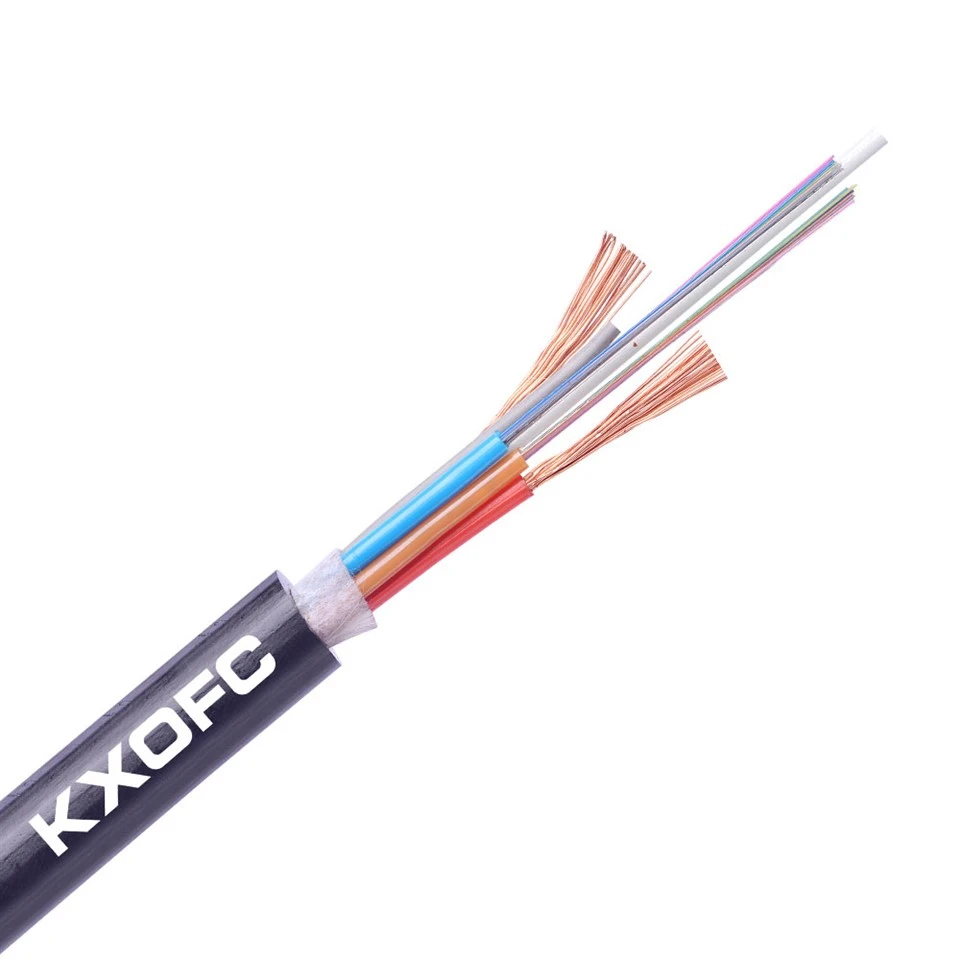
Copper fiber composite cable,optical fibers are housed in loose tubes that made of high-modulus plastic and full of jelly. The tubes (and copper wires) are stranded around a non-metallic central strength member and surrounded with water blocking tape to form a cable core. Outer PE sheath is extruded outside the core .duct optical fiber cable
Description
Technical Parameters
our company
Features
Outdoor composite cable refers to a new type of access method suitable for use as a transmission line in broadband access network systems. It integrates optical fibers and copper transmission wires, and can solve problems such as broadband access, equipment power consumption, and signal transmission.
Environmental Characteristics
• Transport/storage temperature: -40℃ to +60℃
Delivery Length
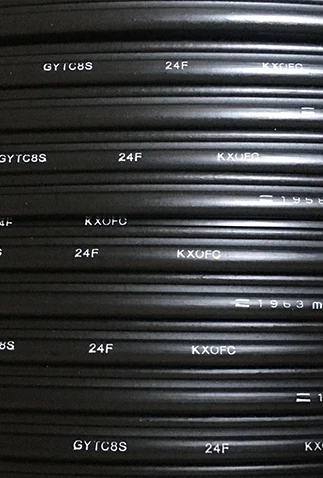
• Standard reel length: 2km/drum or 3km/drum; other lengths are also available.
Small order available? Order MOQ?
Yes sure, Normally 20kms per one specification. For support new customers, we know business always comes from small order.
own brand




Pack and ship


Tips
Loose tube is the core protective component inside layer-stranded and central-tube optical cables, undertaking protection work for bare optical fibers inside the cable. Made of high-modulus PBT plastic, loose tube has strong anti-pressure, anti-aging and hydrolysis-resistant performance. Inside each loose tube, filled special petroleum jelly cream can block moisture, isolate air friction and prevent fiber corrosion under humid underground environment. Cables are divided into central loose tube cable and layer-stranded loose tube cable by internal structure. Central loose tube cable puts all fibers inside one single tube, with low cost for small-core cables below 12 cores. Layer-stranded cable arranges multiple loose tubes around central strength member, supporting 24-core to 288-core large-capacity cabling. Loose tube color coding follows international standard for fiber identification. Qualified loose tube guarantees free fiber activity, avoiding tensile force acting directly on glass fiber during cable laying.
Outdoor communication optical cables are classified into four mainstream types according to laying methods, designed to adapt diverse field construction environments. Direct-buried optical cables equip double steel tape armor and thick anti-corrosion sheath, buried directly underground without extra pipe protection, resisting soil pressure and animal gnawing. Duct optical cables apply thin armor structure, placed inside pre-buried plastic communication pipes, convenient for later maintenance and capacity expansion. Aerial optical cables hang on utility poles with metal hanging wire, featuring low construction cost and fast laying speed for rural roadside network reconstruction. Submarine optical cables adopt multi-layer anti-pressure anti-corrosion structure, bearing seawater corrosion, water pressure and ocean current impact for cross-sea interconnection. Each cable type has exclusive tensile and pressure resistance parameters. Engineering designers select matched cable type based on landform, budget and later operation maintenance demands to reduce network failure rate.
ITU-T formulates unified international fiber standards, among which G.652 and G.657 are the most widely used fiber types for civilian communication projects. G.652D fiber is the universal standard single-mode fiber, occupying over 90% of outdoor trunk optical cable projects. It features low transmission dispersion, stable performance and low production cost, compatible with all 1310nm and 1550nm communication transmission equipment. G.657 fiber is defined as bend-insensitive single-mode fiber, divided into A1 and B2 subtypes. It tolerates ultra-small bending radius, hardly generating bending optical loss, specially designed for indoor wiring, household FTTH cabling and corner pipeline laying. Traditional G.652 fiber will produce obvious loss when bent sharply, while G.657 fiber adapts complex indoor corner laying. Communication engineers match fiber types according to indoor and outdoor usage scenarios to balance construction cost and signal stability.
The four core aging factors gradually destroy the entire optical cable year by year:
1. Outer sheath aging: Ultraviolet rays and temperature-humidity are the top killers. The black PE sheath of the outdoor optical cable is exposed to the elements for a long time. Ultraviolet rays will decompose the plastic material, resulting in three major changes: the outer layer becomes white, hardens, and cracks. Once the sheath cracks, rainwater and moisture directly penetrate the cable core, and the loose sleeve absorbs water, causing hydrogen damage to the fiber core. The loss continues to increase year by year and cannot be repaired. Temperature fluctuations in the environment (low temperatures in winter and intense sunlight in summer) will accelerate the brittleness of the sheath, and overhead lines will develop surface cracks after 8 years.
2. Hydrogen loss and micro-bend loss: Hidden chronic attenuation. When the cable core gets water and the sheath seal fails, water molecules react with the metal reinforcement, generating hydrogen that penetrates the fiber core, causing irreversible hydrogen damage. Indicative manifestation: The optical attenuation increases by more than 0.2 dB each year during repeated measurements. Cleaning the end face and re-melting cannot solve the overall high loss. At the same time, the sheath shrinks and soil compression will cause continuous micro-bends, and over time, the attenuation accumulates, making long-distance links unable to meet the equipment reception standards.
3. Armor layer corrosion (a specific hazard for direct-buried GYTS): Steel tape armor for optical cables buried in the soil will slowly rust and perforate in saline-alkali areas, sewage ditches, and low-lying waterlogged areas. Rust debris will squeeze the loose sleeve and scratch the fiber core; corrosion holes will continuously absorb water, further accelerating the failure of the line. Many underground optical cables will develop extensive rusting after using 6-8 years.
4. Cumulative damage caused by multiple repairs: The same section of optical cable repeatedly being cut and multiple junction boxes being connected will result in multiple stress points: fiber splicing compression, bending, and multiple fusion splicing points adding up to loss. Each repair will shorten the remaining service life. If the same location is repaired more than twice, this line will basically enter the报废 cycle.
Hot Tags: hybrid fiber cables, China hybrid fiber cables manufacturers, suppliers, factory, Composite Fiber Cable, Copper Fiber Composite Cable, optical fiber composite low voltage cable
Technical Characteristics
|
Fiber Count |
12~144 core |
|
Loose Diameter |
2.1mm |
|
Loose Material |
PBT(Polybutylene Terephthalate) |
|
Central Strength Member |
FRP |
|
Conductive part |
Copper wires |
|
Outer Sheath Material |
PE |
|
Nominal Outer Dimension |
9.0~15.0 mm (±0.3) |
|
Tension Strength (Short-Term / Long-Term) |
300N/600N |
|
Crush Resistance (Short-Term / Long-Term) |
1,000 N/100mm 300 N/100mm |
|
Minimum Bend Radius (Static / Dynamic) |
10 x OD / 20 x OD |
*All above the cable size can be customized.
Previous
Copper Composite Fiber CableSend Inquiry


