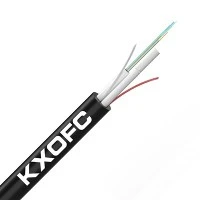
Copper Composite Fiber Cable
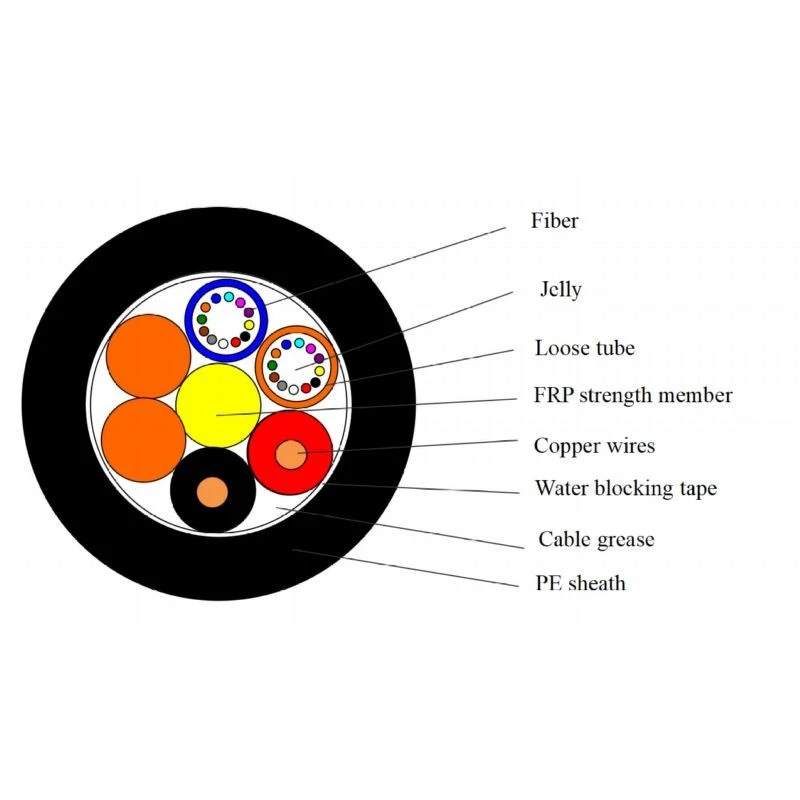
Copper fiber composite cable,optical fibers are housed in loose tubes that made of high-modulus plastic and full of jelly. The tubes (and copper wires) are stranded around a non-metallic central strength member and surrounded with water blocking tape to form a cable core. Outer PE sheath is extruded outside the core .duct optical fiber cable
Description
Technical Parameters
our company
Features
Outdoor composite cable refers to a new type of access method suitable for use as a transmission line in broadband access network systems. It integrates optical fibers and copper transmission wires, and can solve problems such as broadband access, equipment power consumption, and signal transmission.
Environmental Characteristics
• Transport/storage temperature: -40℃ to +60℃
Delivery Length
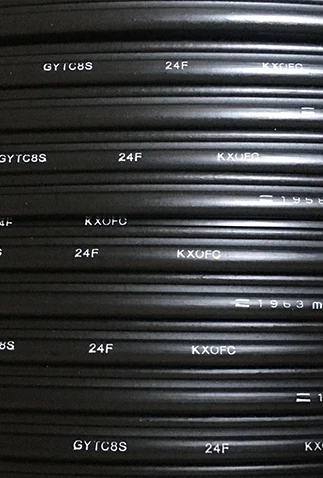
• Standard reel length: 2km/drum or 3km/drum; other lengths are also available.
Small order available? Order MOQ?
Yes sure, Normally 20kms per one specification. For support new customers, we know business always comes from small order.
own brand




Pack and ship


Tips
Focus on the New Prosperity Cycle of the Optical‑Fiber and Cable Industry Amid the Reversed Supply‑Demand Structure
Demand‑Side: Multiple Sectors Jointly Fuel the Latest Fiber Price Hikes With Strong Sustainability
The current round of optical‑fiber price increases is backed by resonant demand across multiple fields. Different from the previous boom cycle driven merely by telecom carriers, this upward trend is likely to last longer.
The last prosperous cycle featuring rising sales volume and prices for optical fibers and cables took place from 2015 to 2018. Its primary driving force came from concentrated capital expenditure by telecom operators, stimulated by combined factors including the Broadband China strategy, large‑scale FTTH deployment and extensive 4G‑network coverage. Major downstream demand changes in the current industrial cycle are listed below:
1.AI Data Centers: Evolving AI network architectures have boosted optical‑fiber consumption. According to CRU statistics, global cable demand from data centers has surged over the past three years. Its share of core‑kilometer consumption climbed from 3.65% in 2023 to 12.67% in 2025. Our estimation shows that global data‑center demand for optical fibers and cables will hit 132 million core‑kilometers in 2026 and 244 million core‑kilometers in 2026‑2027, with year‑on‑year growth rates of 76% and 86% respectively.
2.Drone‑Related Demand: Strong consumption from FPV drones and strategic stock‑piling drives market growth. We calculate that drone‑applied optical‑fiber demand reached 146 million core‑kilometers in 2025 and will reach 152 million core‑kilometers in 2026, representing year‑on‑year rises of 154.95% and 4.1%.
3.Telecom Operators: Telecom‑industry demand maintains steady growth. Domestic operators are wrapping up previous centralized procurement contracts, while a new round of group‑level optical‑cable bidding is around the corner, pointing to clear price‑rising momentum. Network construction by overseas carriers keeps advancing. Our projection puts global carrier‑side demand at 444 million core‑kilometers for 2026 and 455 million core‑kilometers for 2027, with year‑on‑year growth of 4.58% and 2.46%.
Supply‑Side: High Operating Rates and Inelastic Restraints Push Up Benchmark Prices
The supply‑side sector has reached a business‑cycle turning point after the last‑round market reshuffle, accompanied by sharply improved capacity utilization. CRU data records global optical‑fiber output at 652 million core‑kilometers in 2025, up 13.76% year‑on‑year and marking the fastest growth in recent years. Our estimates place global optical‑fiber supply at 725 million core‑kilometers in 2026 and 807 million core‑kilometers in 2027, with annual growth of 11.14% and 11.29%.
Asia‑Pacific and North‑America dominate global supply. Chinese manufacturers account for roughly 60% of worldwide capacity, while overseas key players cover Corning, Furukawa, Sumitomo, Fujikura and Prysmian. Leading global optical‑preform producers are now running factories under heavy‑load operation. The capacity‑expansion cycle for optical preforms lasts 18‑24 months. Having learned lessons from earlier price wars, enterprises make cautious decisions on new capacity projects.
Inelastic supply constraints prevent rapid capacity expansion to satisfy the explosive demand generated by AI computing infrastructure and drone industries. The resulting supply‑demand gap is expected to keep optical‑preform and optical‑fiber prices at elevated levels.
Hot Tags: copper composite fiber cable, China copper composite fiber cable manufacturers, suppliers, factory, Composite Fiber Cable, Copper Fiber Composite Cable, optical fiber composite low voltage cable
Technical Characteristics
|
Fiber Count |
12~144 core |
|
Loose Diameter |
2.1mm |
|
Loose Material |
PBT(Polybutylene Terephthalate) |
|
Central Strength Member |
FRP |
|
Conductive part |
Copper wires |
|
Outer Sheath Material |
PE |
|
Nominal Outer Dimension |
9.0~15.0 mm (±0.3) |
|
Tension Strength (Short-Term / Long-Term) |
300N/600N |
|
Crush Resistance (Short-Term / Long-Term) |
1,000 N/100mm 300 N/100mm |
|
Minimum Bend Radius (Static / Dynamic) |
10 x OD / 20 x OD |
*All above the cable size can be customized.
Previous
No InformationNext
Hybrid Fiber CablesSend Inquiry