

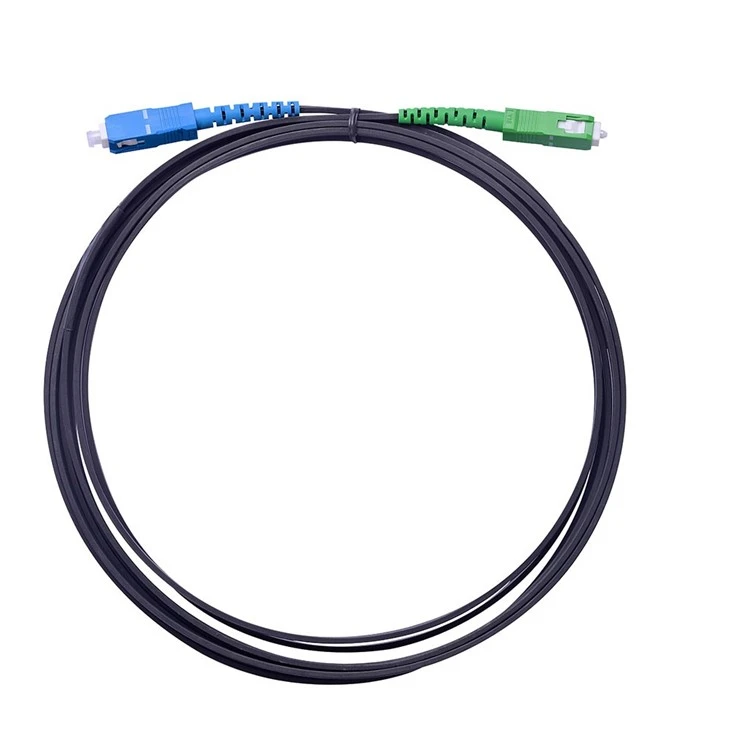
Conectores De Fibra Optica
Drop cables are cables that run from the distribution point or cable to the subscriber/user.
Fiber patch cord, often called fiber patch cable, fiber jumper, or fiber patch lead, is a length of fiber cable that terminated with fiber optic connectors at each end. The connectors allow fiber optic patch cord to be rapidly connected to an optical switch or other telecommunications/computer device.
Description
Technical Parameters
our company
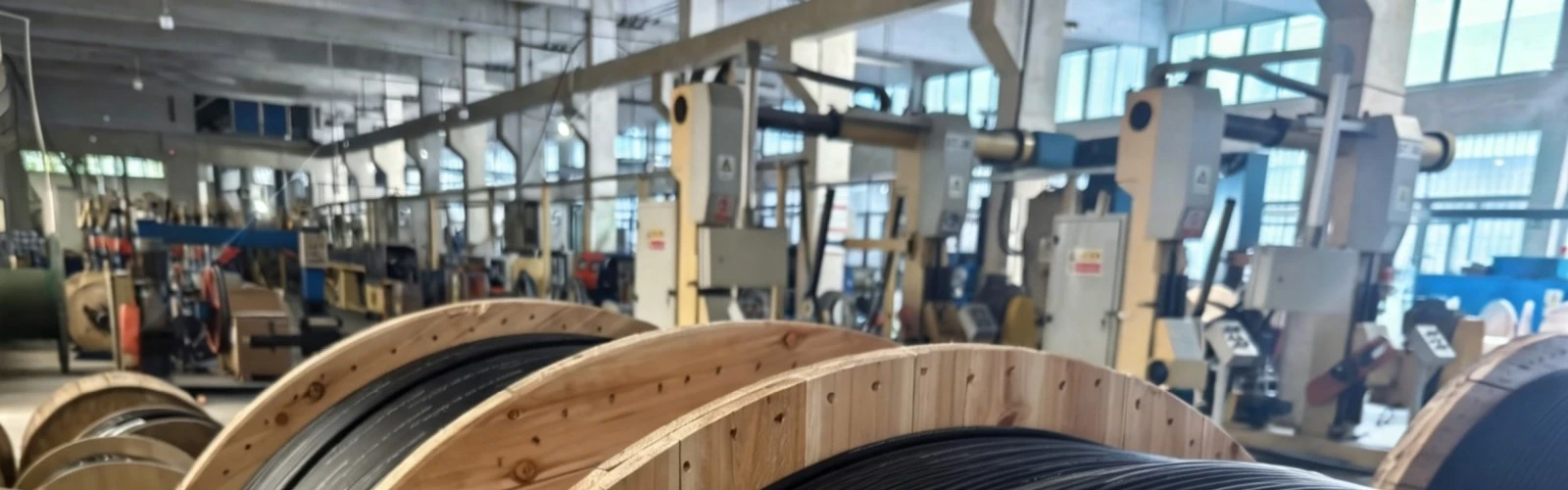
Environmental Characteristics
- Transport/storage temperature: -20℃ to +60℃
Delivery Length
- Standard reel length:5m,10m,20m,35m, 45m,50m,75m,100m,150m,200m,300m;
- Other lengths are also available.
Our services
1. 24-hour one-on-one online service to ensure efficient support.
2. Thoughtful customer reception from hotel reservation to factory visit.
3. Extremely cautious throughout the process from order confirmation to product shipment.
own brand


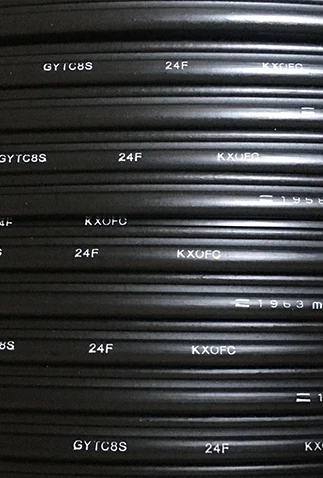


Pack and ship


Tips
The optical fiber and cable sector is currently showing a strong bearish trend. With so many overvalued technology sectors experiencing significant declines, why would funds choose to buy into this niche? Today, let's take a closer look at the optical communication branch. In the minds of many people, optical fibers and cables were still considered the cables used for broadband connections during the era of expanding broadband services: low cost and low barriers. However, in the era of AI, optical fibers are no longer the ordinary glass fibers used for home broadband connections. The current optical fibers and cables are more like the blood vessels in the AI computing power network. Just like a blocked blood vessel in the human body leads to paralysis, if the bandwidth of optical fibers cannot keep up, even with multiple GPUs, the AI computing power will be directly blocked. Currently, the G654E ultra-low loss fiber, a special fiber with ultra-low loss, multi-core, and hollow structure, belongs to high-end consumables and has a higher price. It can better meet the hard requirements of high bandwidth and low latency in computing power clusters. However, the threshold for high-end optical fibers is not low. The core lies in the optical rods, which are also known as optical preforms. The purity of the formula and the deposition process require extremely high standards. For a long time, this technology was basically controlled by overseas giants, and we only had low-end products but no high-end technology. We could only look up to them. However, domestic optical fiber enterprises have a strong industrial foundation and, after investing heavily in research and development, have finally achieved results in recent years. The G654E ultra-low loss optical fiber has been put into mass production, with obvious cost advantages, and multi-core and hollow optical fibers have also continued to make breakthroughs. Overseas cloud companies have also begun to purchase large quantities of domestic high-end optical fibers in recent years, indicating that our technology and production capacity have been recognized. And the global market share of high-end special optical fibers is large. However, currently, the market share of our country in the overseas market is not high. Ordinary optical fibers account for more than half of the overseas market share in our country, but the overall domestic share of high-end special optical fibers in the overseas market is only in the single digits. The European and American manufacturers have long dominated the market, and there is a large expansion space for our overseas expansion. Overall, optical fibers and cables have shifted from traditional communication infrastructure to an important part of AI computing power hardware. Especially for the leading enterprises with high technical barriers, the market advantage is very obvious.
The optical fiber and cable industry is entering a historic major cycle. The construction of AI computing infrastructure and emerging application scenarios such as drones have formed a structural pull from the demand side. Coupled with the supply constraints of the full-load operation of the upstream optical fiber preforms production capacity and the production expansion cycle lasting 18-24 months, the industry's supply-demand gap has been established and will persist for a long time. Since January 2026, the price of China's G.652D bare fiber has soared from 18 yuan per core-kilometer to 85-120 yuan per core-kilometer. The price of special G657A1 optical fiber in Europe in March increased by as much as 122.2% compared to January. The global optical fiber prices have shown a resonant upward trend - this is the first time in over seven years that the Chinese price has exceeded the European level. Headline enterprises with a full-chain layout of "optical fibers - optical cables - optical fibers" will deeply benefit from this round of price and volume growth cycle, and the commercialization acceleration of cutting-edge technologies such as hollow-core optical fibers will open up the long-term growth ceiling for the industry.
The core driving factor is the explosive growth of AI computing power infrastructure: Global hyperscale data centers (Hyperscalers) are continuously increasing their investment in AI infrastructure. The traffic of AI data centers is increasing by more than 50% annually, and the number of optical fibers required per rack has increased by 30-40 times. According to CRU's prediction, the global demand for optical fiber cables will reach 577 million kilometers in 2026; according to Stratview Research's prediction, the global demand for optical fibers will exceed 800 million kilometers by 2027, and the optical cable market will exceed 13 billion US dollars by 2031.
The application of drones drives the consumption of special optical fibers: Optical fiber drones utilize the advantages of anti-electromagnetic interference and high bandwidth, and the core adopts G.657A2 special optical fibers. Each flight consumes approximately 20-30 kilometers and is a one-time consumable. In 2025, Ukraine received a total of 5 million FPV drones, which was 2.5 times that of 2024, forming a structural pull on the special optical fiber market from the demand side.
Supply-side rigid constraints are evident: The production capacity in the previous industry downturn has been largely cleared. The entire process of expanding optical fibers (environmental approval, equipment procurement, factory construction, installation and commissioning, and yield improvement) takes 18-24 months. Since January 2026, global optical fiber production capacity has approached full capacity, and the optical fiber production lines of the four major Chinese enterprises are all operating at full capacity, and the production capacity utilization rate of overseas manufacturers remains at a high level. The new optical fiber production plant of Corning in North Carolina is still expanding. Fujikura's new production capacity will not be available until 2028.
Product structure shifts towards high value-added: The drawing speed of G.657A2 optical fiber is 10%-15% lower than that of G.652D, structurally occupying the capacity of ordinary optical fibers; the price of G.654E ultra-low loss optical fiber has risen to 240-260 yuan per kilometer; hollow-core optical fibers have risen to 25,000-50,000 yuan per kilometer. Production capacity and profits are tilted towards high-end products.
Policy and infrastructure support: The BEAD project in the United States allocates approximately 70-80% of the funds (a total of 42.4 billion US dollars) to optical fibers. It is expected that the annual new demand for US optical fibers will increase by 5-10%. The European digital upgrade plan, China's "East-West Computing" and 10-gigabit optical network pilot projects are continuously advancing.
In-depth analysis of the upstream (optical fiber preforms and raw materials): Optical fibers are the value and technology high point of the optical fiber and cable industry chain, accounting for about 70% of the industry chain's profits. The preparation process includes VAD, OVD, MCVD and other gas-phase deposition methods, with the number of deposition layers reaching several thousand, and the reaction temperature needs to be stable at over 2000 degrees. Key raw materials include high-purity quartz glass tubes (dominated by Germany's Heraeus in the high-end market, and domestic Shiqing shares have achieved a breakthrough), tetra-chlorogen (China is the world's largest producer of germanium), and ultra-high purity helium (high dependence on imports). In 2025, global optical fiber production capacity was approximately 962 million kilometers, with China accounting for 65.9%. Representative enterprises: Changfei Fiber, Hengtong Optoelectronics, Zhongtian Technology, and Fenghuang Communication.
Middlestream (fiber optic manufacturing): The middlestream is the fiber drawing and optical cable winding process. Fiber manufacturing includes optical fiber drawing, coating, and testing, and the core competitiveness lies in yield control and scale effect. The technical threshold of the optical cable winding process is relatively low, and it has rapidly achieved a global decentralized layout. In 2025, global fiber production capacity was approximately 1.131 billion kilometers, with China accounting for 64.36%. The competitive landscape shows a feature of "increased demand volume and market concentration", with the share of centralized procurement exceeding 10% in 2025 for companies such as Zhongtian Technology (17.9%), Hengtong Optoelectronics (15.9%), Changfei Fiber (14.8%), and Fenghuang Communication (12.0%). Overseas major manufacturers include Corning, Prusmans, Gohashi Electric, Sumitomo Electric, and Fujikura).
Downstream (Application Scenarios and Terminal Requirements): The applications cover telecommunications networks (operator backbone networks/access networks), AI data centers (internal interconnection within DCN and DCI interconnection), smart grids, unmanned aircraft, military sensing, rail transit, etc. AI is driving the demand in the downstream from traditional telecommunications to high-value products such as ultra-low loss fibers, hollow fibers, multi-core fibers, and high-quality multimode fibers. According to Guan Yunzhi Tian, by 2027, the proportion of AI-driven data center scenario fiber demand will increase from less than 5% in 2024 to 35%.
Market Space and Value Stream Market Space: According to CRU data, global fiber shipments reached 662 million core kilometers in 2025, with a year-on-year growth of 15.3%, exceeding previous predictions. The global demand for fiber optic cables is expected to reach 577 million core kilometers in 2026. The global fiber preform market was approximately 2.7 billion US dollars in 2024 and is expected to reach 5.9 billion US dollars in 2031, with a CAGR of approximately 7.5%. China plans to build 211.3 thousand kilometers of optical cable lines in 2025, with a total length of 74.99 million kilometers, and is expected to reach 824.3 million kilometers in 2026.
Value Stream and Profit Distribution: The profit distribution in the fiber optic cable industry follows a "7:2:1" pattern - fiber preforms account for 70%, fibers account for 20%, and optical cables account for 10%. The upstream fiber rod环节 has a significantly higher gross margin due to extremely high technical barriers (complexity of processes, capital intensity, and long expansion cycle). Companies with independent production capabilities in fiber rods have an absolute advantage in the cost end. Currently, the premium of high-end fiber products is prominent: ordinary G.652D fiber costs 85-120 US dollars per core kilometer, G.654E special fiber costs 240-260 US dollars per core kilometer, and hollow fiber costs 25,000-50,000 US dollars per core kilometer.
Hot Tags: conectores de fibra optica, China conectores de fibra optica manufacturers, suppliers, factory, Aerial Drop Cable, fiber optic patch cord, Flat Drop Fiber Cable, FTTH GJYXCH cable, Outdoor Drop Cable, unarmored fiber patch cord
Technical Characteristics
| Cable Part | |
| Fiber Count | 1~4 |
| Fiber type | G657A1 or A2 |
| Strength Member Material | FRP or Steel wire |
| Dielectric Strength Member size | 2 x 0.5mm /2x0.4mm |
| Messenger Material | Steel wire |
| Messenger size | 1.0mm / 7*0.33mm |
| Nominal Outer Dimensions(±0.3) | 2.0 mm x 5.0 mm |
| Outer Jacket Material | LSZH |
| Tension Strength (Short-Term / Long-Term) | 300N/600N |
| Crush Resistance (Short-Term / Long-Term) |
1000 N/100mm 2200 N/100mm |
| Minimum Bend Radius (Static / Dynamic) | 20 x OD / 40 x OD |
| Connectors part | |
| Connector type | SC/UPC,SC/APC |
| Insertion Loss | ≤ 0.25dB |
| Return Loss (For Single mode) | UPC ≥ 50dB , APC ≥ 60dB |
| Repeatability | ±0.1dB |
*All above the cable size can be customized.
Previous
No InformationNext
Drop Cable 1 CoreSend Inquiry
You Might Also Like


