
GYXTC8Y Fiber Cable
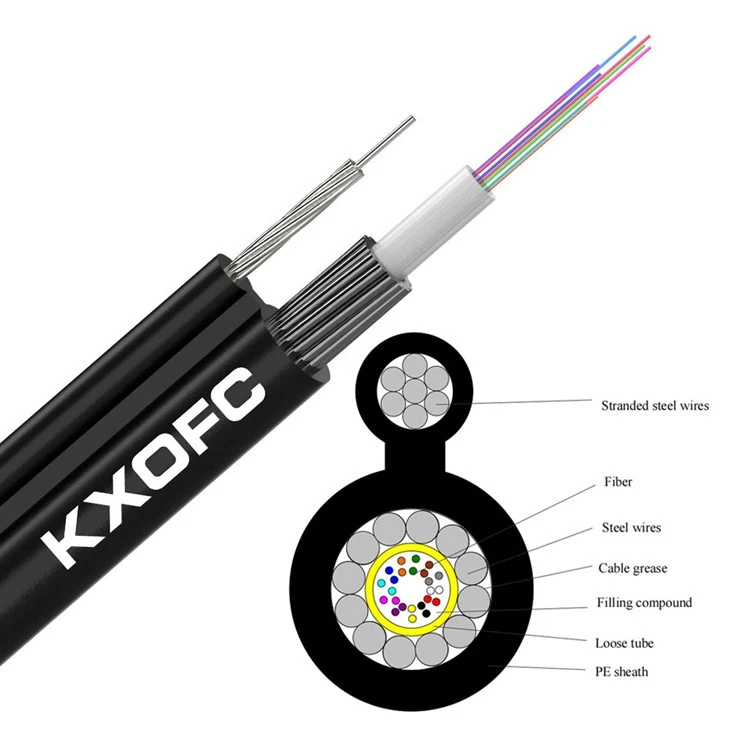
GYXTC8Y outdoor aerial fiber optic cable is designed for use in aerial outside plant installations. Fibers are housed in loose tubes that made of high-modulus plastic and filled with jelly. The steel wires around the central loose tube to form a cable core. PE outer coating, made in the shape of figure 8 , self-support part 7 steel wires (or 1 single steel messenger) woven together.
Description
Technical Parameters
our company
Features
Outdoor aerial fiber optic cable has reasonable design and accurate control of the residual length of the fiber in the loose tube, so that the cable has excellent tensile performance and temperature performance. Outdoor aerial fiber optic cable GYXTC8Y core is filled with oil paste to ensure longitudinal water resistance. A single polyethylene jacket with additives offers superior protection against UV radiation, fungus, abrasion, and other environmental factors.
Environmental Characteristics
• Transport/storage temperature: -40℃ to +60℃
Delivery Length
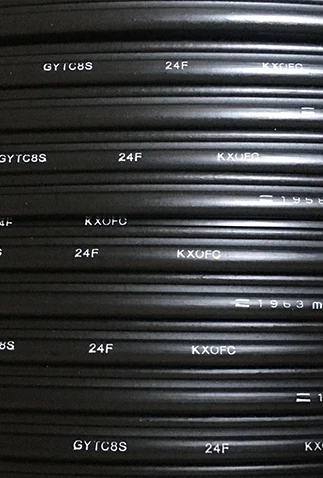
• Standard reel length: 2km/drum; other lengths are also available.
Design and service
Cable design and package design available. OEM/ODM service also available.
You can share us your requirement.
own brand




Pack and ship


Tips
Sharp Surge in Optical‑Fiber Prices; Bullish on Sustained High‑Level Price Growth Driven by Supply‑Demand Gap
The optical‑fiber and cable market features a multi‑layered pricing system composed of three major categories.
1.Loose‑fiber spot price: It mirrors real‑time supply and demand, boasts the highest price sensitivity and acts as a leading indicator for industry prosperity.
2.Centralized‑procurement prices for telecom operators: Fixed via annual bidding, these prices are shaped jointly by competition landscape, commercial tactics and supply‑demand expectations, and exert substantial impacts on manufacturers' short‑term revenue.
3.Long‑term contract price: Medium‑and‑long‑term contractual rates signed between certain producers and large‑sized domestic or overseas clients, whose price adjustments lag noticeably behind volatile spot‑market quotations.
Optical‑fiber prices have embarked on an upward track with divergent growth margins and timelines.
1.Soaring spot quotations for optical fibers. CRU statistics show that the tax‑inclusive spot price of China‑made G.652‑D optical fiber hit 94.2 RMB per core‑kilometer in March 2026, representing a 165% month‑on‑month surge from January and surpassing the peak recorded in the previous business cycle. Global markets share the same upward momentum. Spot‑price increments from January stand at 48%, 128% and 214% in the United States, Europe and India respectively.
2.Rising bidding prices from telecom‑operator procurement. Local‑level bidding outcomes for domestic carriers have demonstrated an upward shift in the benchmark price (the ceiling bid price for 24‑core GYTA single‑mode G.652‑D optical cable reaches 2500 RMB per sheath‑kilometer, equivalent to over 70 RMB for bare fiber). Nevertheless, prices for group‑wide optical‑cable centralized procurement remain under negotiation.
Against the backdrop of tight supply‑demand balance, we anticipate the benchmark optical‑fiber price will stay at a high level throughout 2026‑2027, though its upward trajectory carries uncertainties. Primary risks are listed as follows. First, capacity roll‑out on the supply side. Driven by handsome profits in the optical‑fiber sector, optical‑preform investment yields high returns. The timeline and scale of new capacity launch remain unpredictable. Second, structural fluctuations on the demand side. Eased geopolitical tensions would cut the consumption‑based demand for drone‑used optical fibers. Besides, operators may push for lower bidding prices or postpone centralized procurement amid capital‑expenditure pressure, which will deliver short‑term shocks to current‑period demand.
Our calculations indicate that the global optical‑fiber market will remain supply‑short from 2026 to 2027. Tight supply‑demand fundamentals are expected to push fiber prices higher at elevated benchmarks. Our forecast is built upon the following baseline assumptions: newly‑added capacity expands in an orderly manner yet grows slower than market demand; emerging demands fueled by artificial intelligence and drones materialize steadily as core growth drivers.
Under the optimistic scenario where optical‑preform capacity constraints turn out tighter than expected and AI‑ and drone‑related demand keeps expanding, prices may rise beyond projections. Under the pessimistic scenario marked by concentrated commissioning of restored or expanded preform capacity, eased global geopolitical conflicts and delayed operator procurement, prices may slip moderately down from their peak values.
Hot Tags: gyxtc8y fiber cable, China gyxtc8y fiber cable manufacturers, suppliers, factory
Technical Characteristics
|
Fiber Count |
2~12 |
|
Loose Diameters |
2.2 mm |
|
Loose Material |
PBT ((Polybutylene Terephthalate)) |
|
Self Strength Member |
Steel wire |
|
Surrounded steel wires |
12x1.0mm,Plastic coated |
|
Outer Jacket Material |
HDPE |
|
Messenger |
7*1.2mm steel wires |
|
Nominal Outer Dimensions |
8.0mm*13.5mm(±0.3) |
|
Tension Strength (Long-Term /Short-Term) |
3000N/7000N |
|
Crush Resistance (Long-Term /Short-Term) |
300 N/1000mm |
|
Minimum Bend Radius (Static / Dynamic) |
10 x OD / 20 x OD |
*All above the cable size can be customized.
Previous
No InformationNext
Figure 8 CableSend Inquiry


