
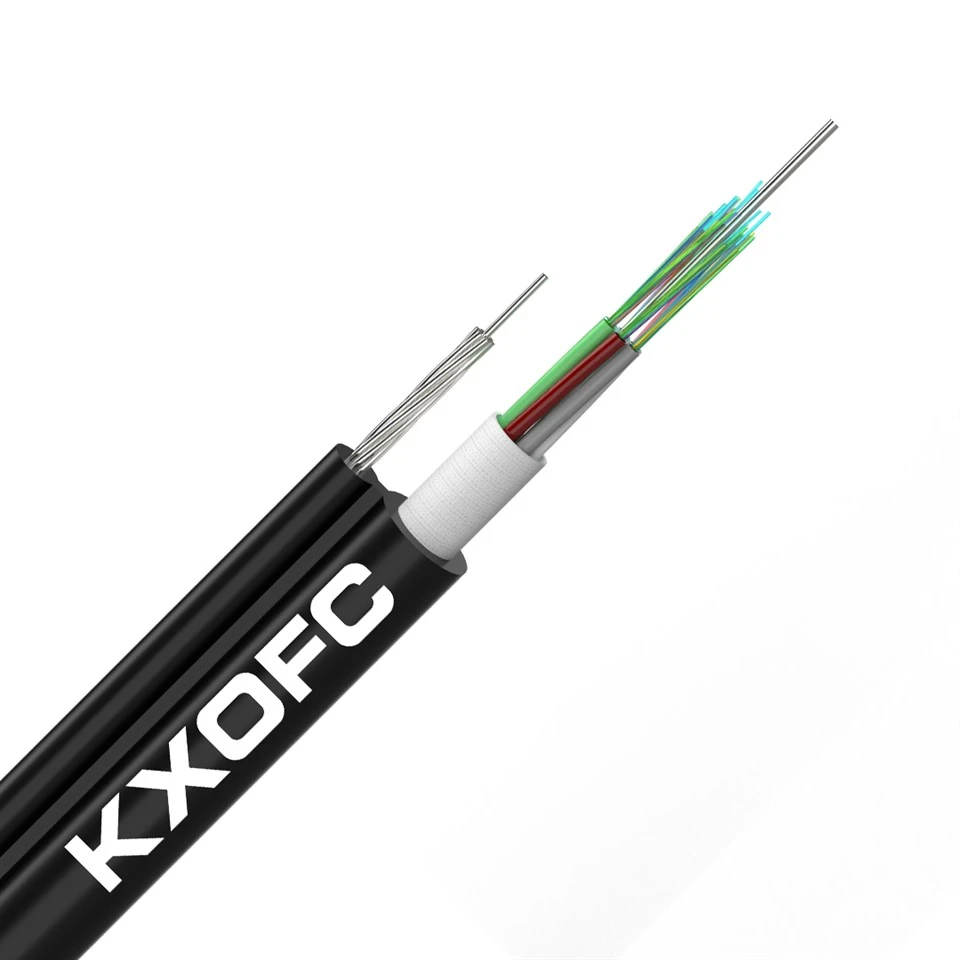
Figure 8 Fiber Cable
GYTC8Y self-supporting aerial fiber cable fiber in the loose tubes which are filled with waterproof compound. The non-armored design enhances flexibility,while the figure-8 structure is suitable for overhead installation.It can efficiently connect different communication nodes and provide support for trunk and regional communication network.
Description
Technical Parameters
our company
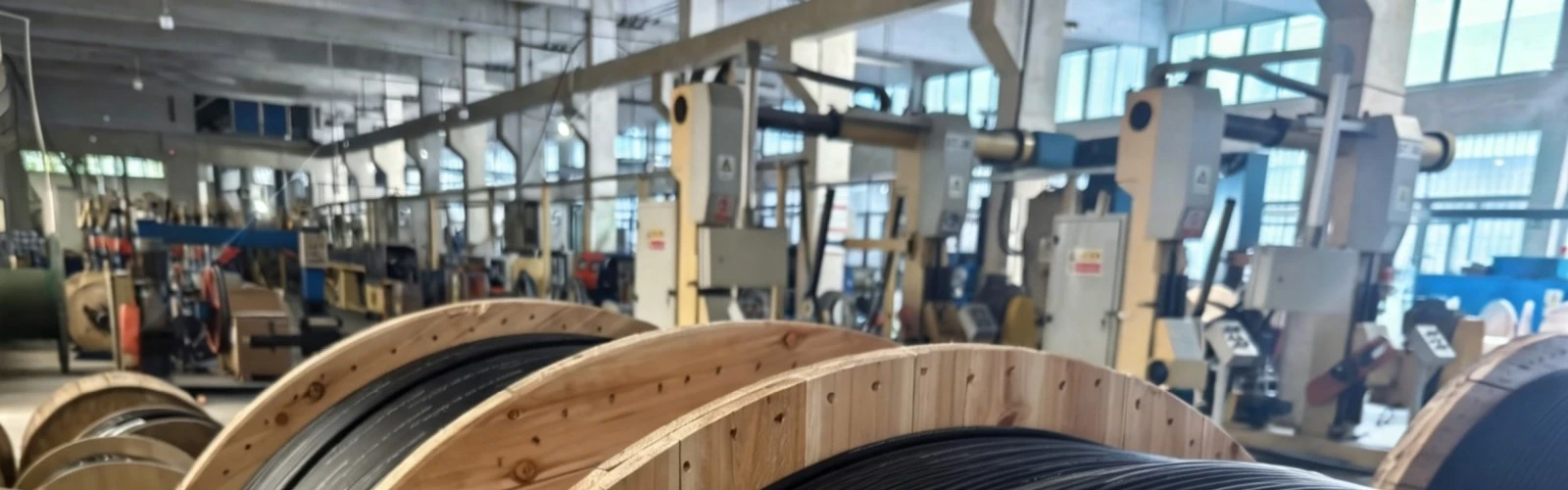
Features
Self supporting aerial fiber cable has reasonable design and accurate control of the residual length of the fiber in the loose tube, so that self supporting aerial fiber cable has excellent tensile performance and temperature performance. The cable core is filled with oil paste to ensure longitudinal water resistance. A single polyethylene jacket with additives offers superior protection against UV radiation, fungus, abrasion, and other environmental factors.
Environmental Characteristics
• Transport/storage temperature: -40℃ to +60℃
Delivery Length
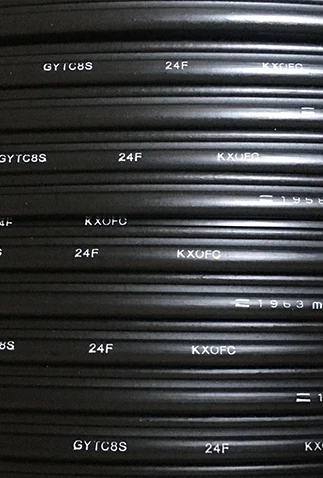
• Standard reel length: 2km/drum; other lengths are also available.
Can I customize fiber optic cable specifications?
Yes, we provide full customization service for optical cables. We can customize fiber core number (1/4/8/12/24/48/96/144 cores), fiber type (G652D/G657A1/G657A2), cable length, jacket color, sheath material and tensile strength according to your project requirements.
own brand




Pack and ship


Tips
Sensitivity Analysis of Corporate Profits to Optical‑Fiber Price Hikes
The boost brought by fiber‑price increases to manufacturers' profitability follows a non‑linear pattern. Its profit elasticity hinges on two core factors: in‑house optical‑preform production capacity on the cost side and client mix on the revenue side.
For enterprises with fully self‑supplied preforms or stable long‑term procurement agreements, price gains can be roughly translated directly into gross profits when raw‑material costs stay unchanged in the short run. Quantitative estimation can be carried out via the formula below: Incremental Profit ≈ (Current‑period Average Delivery Price − Cyclical Bottom Price) × Sales Volume
It is worth noting that profit elasticity is not simply calculated by multiplying the spot loose‑fiber price growth by total sales volume. Instead, it depends on the actual growth of the company‑wide average selling price (ASP). Given the time lag and discounted terms for centralized‑procurement and long‑term‑contract prices, the overall ASP growth of fiber manufacturers generally falls behind the price surge of loose‑fiber spot goods.
To visualize such sensitivity, we establish a simplified model with the key assumptions listed below:
Assumption 1: The enterprise registers an annual sales volume of N hundred‑million core‑kilometers.
Assumption 2: Loose‑fiber sales account for 30 % of total revenue (fully price‑elastic), while centralized‑procurement and long‑term‑contract sales make up the remaining 70 %. The contracted price is set at roughly 80 % of the average spot price.
Assumption 3: Production costs remain unchanged, and all price increments contribute directly to gross profit.
Calculation process: When the spot price of loose‑fiber rises by 1 RMB per core‑kilometer, the growth in the enterprise's composite average selling price is computed as follows: 1 RMB × 30 % + 1 RMB × 80 % × 70 % = 0.86 RMB per core‑kilometer. Accordingly, under this model, every 1‑RMB spot‑price increase for loose‑fiber drives a profit gain of 0.86 × N hundred‑million RMB for the company.
This model does not apply to the following scenarios:
1.Enterprises that purchase optical preforms externally without price‑locked long‑term contracts will face raw‑material costs fluctuating with market prices, which drastically cuts profit increments.
2.The model adopts a simplified premise that pricing and delivery for centralized‑procurement and long‑term‑contract orders take place simultaneously. In practice, contract prices are fixed at the time of bidding or signing. A considerable share of orders fulfilled in the current period are still governed by former pricing terms. As a result, profit expansion lags behind spot‑price increases by one to two quarters.
Hot Tags: figure 8 fiber cable, China figure 8 fiber cable manufacturers, suppliers, factory, Aerial Fiber Optic Cable, Aerial Fibre Optic Cable, fig 8 self support optical fiber cable, Figure 8 Fiber Optic Cable, Overhead Fiber Optic Cable, Self Supporting Fiber Optic Cable
Technical Characteristics
|
Fiber Count |
4~96 |
|
Loose Diameters |
2.2 mm |
|
Loose Material |
PBT ((Polybutylene Terephthalate)) |
|
Self Strength Messenger |
Steel wire |
|
Central Strength Member |
Steel wire |
|
Outer Jacket Material |
HDPE |
|
Messenger |
7*1.2mm steel wires |
|
Nominal Outer Dimension |
9.0mm*14mm (±0.3) |
|
Tension Strength (Long-Term /Short-Term) |
3000N/7000N |
|
Crush Resistance (Long-Term /Short-Term) |
300 N/1000mm |
|
Minimum Bend Radius (Static / Dynamic) |
10 x OD / 20 x OD |
*All above the cable size can be customized.
Previous
48 Core Figure 8 Fiber CableNext
GYXTC8Y Fiber CableSend Inquiry


