


Direct Burial Single Mode Fiber Optic Cable

33 GYTA53-2
Direct Burial Single Mode Fiber Optic Cable
Fiber type:G652D
Loose tube:2.1mm
Strength member:2.0mm FRP
Armor: Aluminum tape
Inner sheath:0.8mm
Armor:Steel tape
Outer Sheath:11.0mm PE
Description
Technical Parameters
our company

Direct burial single mode fiber optic cable stranded multi-tubes double armored metal optical fiber cable GYTA53 or GYFTA53
GYTA53 direct burial single mode fiber optic cable, optical fibers are housed in loose tubes that made of high-modulus plastic and filled with tube filling compound. The tubes (and fillers) are stranded around a central strength member to form a cable core. The core is protected with Aluminum tape, a layer of inner PE sheath and corrugated steel tape. Then another layer outer PE sheath is extruded.
GYTA53 is an outdoor optical fiber cable featuring a stranded-tube design, dual sheaths, and dual armor layers. It is suitable for direct burial and offers high resistance to moisture, rodent damage, and lateral pressure, making it ideal for long-haul communications, inter-office links, and field-deployed direct-buried lines.

What is the structure of this optical cable?
Stranded Core
Optical fibers are housed within loose buffer tubes filled with a water-blocking gel. Multiple loose tubes are stranded around a central metallic strength member, with the interstitial spaces in the cable core also filled with water-blocking material, ensuring full-cross-section water resistance.
Dual-Sheath, Dual-Armor Design
The cable core is first wrapped longitudinally with a polymer-coated aluminum tape, followed by an extruded polyethylene inner sheath. Subsequently, it is wrapped longitudinally with a double-sided polymer-coated steel tape, and finally covered with an extruded polyethylene outer sheath.
Primary Functions
The aluminum tape enhances moisture resistance; the steel armor provides superior resistance to lateral pressure and crushing; and the outer polyethylene sheath offers protection against corrosion and environmental aging, making the cable suitable for direct-burial applications.
Burial Depth and Installation Methods
Applicable Methods
Suitable for both direct burial and installation within conduits; direct burial is the most typical application.
Applicable Methods
In standard soil, the depth should generally be no less than 1.2 meters; in semi-rocky terrain, no less than 1.0 meter; and in solid rock, no less than 0.8 meters. In rocky trenches, a bedding layer of fine soil or sand must be laid first.

Installation Guidelines
Choose the Direct Burial Single Mode Fiber Optic Cable that suits you best.
Ensure the trench bottom is level and free of debris, such as crushed stone, to prevent damage to the outer sheath.
Maintain an appropriate bending radius; during installation, this should generally be no less than approximately 20 times the outer diameter of the optical cable.

When laying multiple optical cables in the same trench, ensure sufficient clear spacing between them and avoid any crossing or overlapping.
During backfilling, first cover the cables with fine or pulverized soil and compact it, then proceed with backfilling in layers.
Key Advantages
Choose the Direct Burial Single Mode Fiber Optic Cable that suits you best.
Safe and Reliable
Buried underground, these cables are well-protected from external damage and environmental factors, resulting in a low failure rate. Unlike overhead lines, they pose no safety risks to pedestrians or vehicles.
01
Robust Protection
Typically armored with steel tape or steel wire, they are resistant to mechanical damage, rodent gnawing, and soil corrosion-and can even withstand the weight of heavy vehicles passing overhead.
02
Stable Transmission
Less susceptible to electromagnetic interference, they offer superior power transmission and signal quality, making them highly effective for long-distance, high-capacity transmission.
03
Urban Aesthetics
By eliminating the need for utility poles and towers, they keep streets looking neat and uncluttered-a primary reason why they are preferred for urban underground infrastructure upgrades.
04
Testing Process of GYTA53
Optical fibers must undergo rigorous, multi-layered testing as following.
The first step upon procurement is to test the bare fiber, ensuring that every spool falls within the acceptable range.
After the bare fibers are colored, they must undergo further testing; only once they pass these tests can they be used for the production of loose-tube optical fibers.
Once the fiber optic units (loose tubes) have passed testing, they are stranded around a central strength member; following the completion of this core assembly, the optical fibers are tested once again.
After the stranded elements are covered with Aluminum tape and inner sheath, the optical fibers are must to be tested.
Once the optical fibers have passed inspection, they undergo steel-tape armoring and the application of an outer sheath.
Once completed, the product is wound into rolls and undergoes a final fiber-optic test before the panels are sealed; only after passing this test is it packed and shipped.

PACKAGE
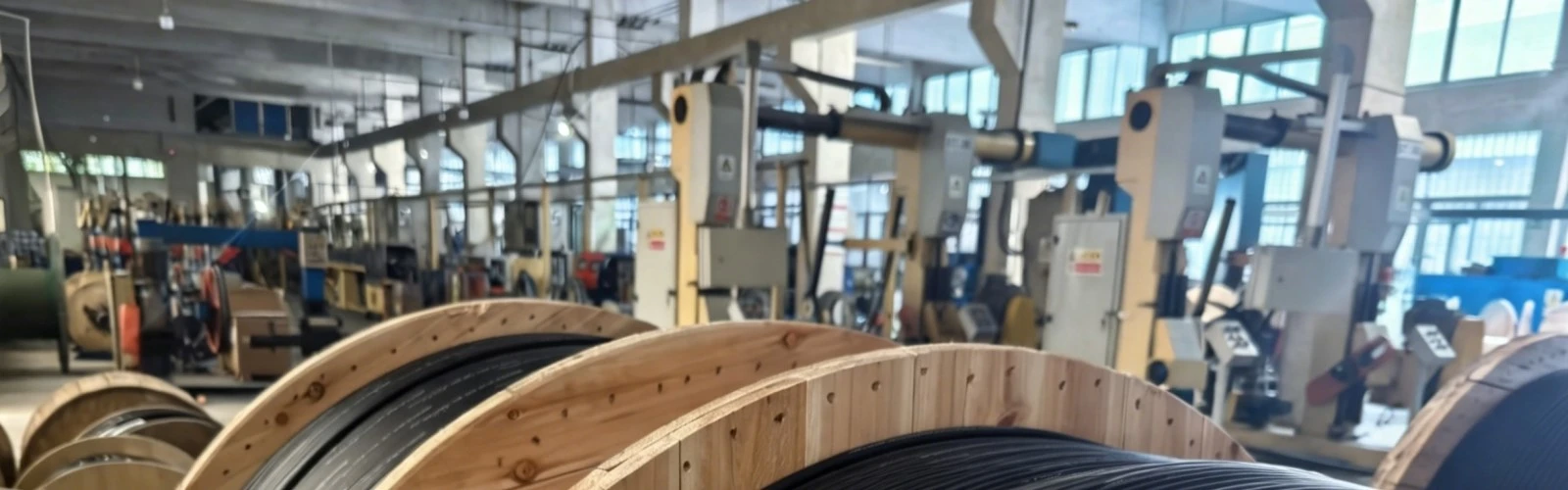
Buried optical cables are relatively heavy; for lengths of 2–3 km, solid wood reels are recommended, while for 4–5 km, steel reels are advised.
Frequently Asked Questions
What methods of payments are supported?
+
-
How to choose from traditional, mainstream payment methods:
Telegraphic Transfer (T/T): The most common method; typically involves a 30% deposit via T/T, with the balance due upon presentation of the Bill of Lading.
Letter of Credit (L/C): Backed by a bank's credit guarantee, offering a high level of security; governed by the international standard UCP600.
Collection (D/P, D/A): Includes Documents against Payment (D/P) and Documents against Acceptance (D/A).
How long of production time?
+
-
The standard lead time for regular orders is 20 days; specific requirements quantities can be discussed further.
What`s the brand of Fiber you use ?
+
-
We work in partnership with major optical fiber manufacturers, such as YOFC, ZTT, and HENGTONG.
Where is your factory located?
+
-
We are located in Lin'an District, Hangzhou City, Zhejiang Province. Our factory and foreign trade office are at the same location; we operate as an integrated manufacturing and trading company.
When can I come to visit the factory?
+
-
We are typically closed on Sundays; otherwise, we are in full production. You are welcome to visit at any time.
We welcome your inquiries regarding fiber optic cables. We are happy to answer any questions you may have and guarantee a response within 12 hours. Please find our contact details below.
Our address
No. 28 Linglong Street,Lin'an District, Hangzhou City, Zhejiang Province, China
Phone Number
86-13819155030
shiney@kexincable.com
Hot Tags: direct burial single mode fiber optic cable, China direct burial single mode fiber optic cable manufacturers, suppliers, factory, Direct Burial Armored Fiber Optic Cable, direct burial optical fiber cable, Direct Burial Single Mode Fiber Optic Cable, Fiber Optic Cable Buried, Fiber Optic Cable for Outdoor Use, Outdoor Fiber Optic Cable Single Mode
Technical Characteristics
|
Fiber Count |
12~144 core |
|
Loose Diameters |
2.1mm |
|
Loose Material |
PBT |
|
Central Strength Member |
Steel wire |
|
Armor #1 |
Aluminum tape |
|
Inter Jacket Material |
PE |
|
Armor #2 |
Corrugated Steel tape |
|
Outer Jacket Material |
PE |
|
Nominal Outer Diameter (±0.3) |
11.0~17.0 mm |
|
Tension Strength (Short-Term / Long-Term) |
3000N/1000N |
|
Crush Resistance (Short-Term / Long-Term) |
3,000 N/100mm 1000 N/100mm |
|
Minimum Bend Radius (Static / Dynamic) |
10 x OD / 20 x OD |
*All above the cable size can be customized.
Send Inquiry


