

Mini Figure 8 Cable
There are single armor and double armor (indoor optical cable). The structure of the single-core indoor armored optical cable is: tightly wrapped optical fiber + aramid fiber (for tensile resistance) + stainless steel hose (for compression resistance, bending resistance, and rodent resistance) + stainless steel braided wire if need (for torsion resistance) +Outer sheath (PVC is usually used, and flame-retardant PVC and LSZH are also used according to different functions.
Description
Technical Parameters
our company
Features
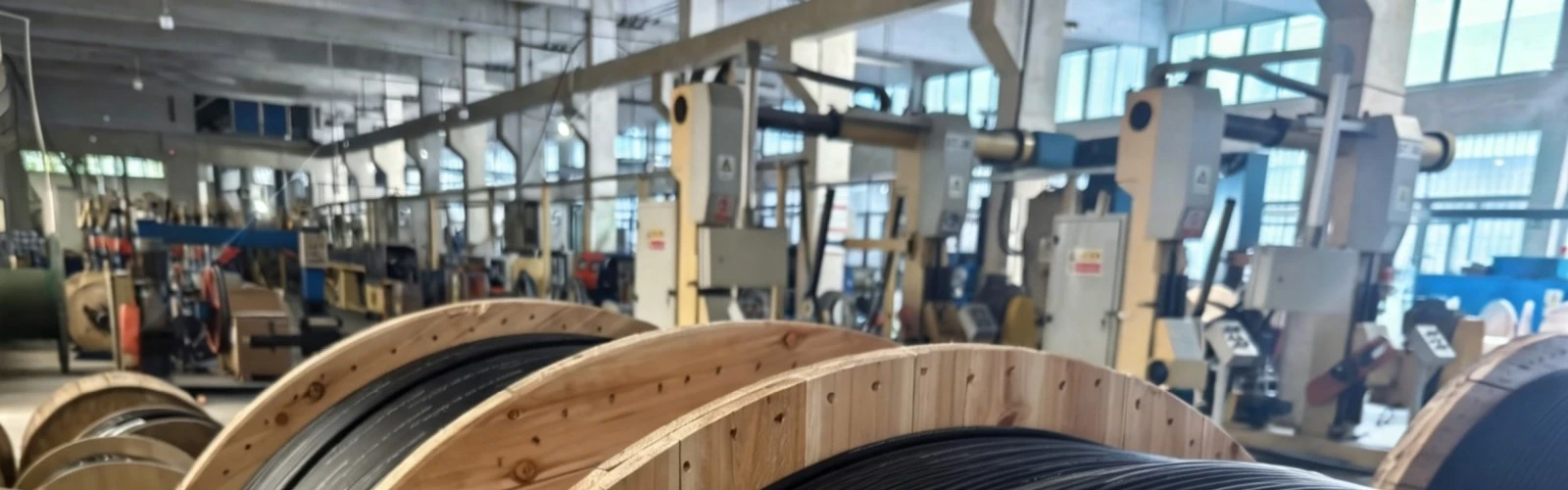
- Mini armored layer used to decrease the outer diameter and cable weight, also convenient for laying and splice
- Cable using high property aramid yarn, increasing tension property, and fit for long distance use
- Cable using spiral metal armored layer with best crush property, and cable is very flexible and easy bend
- PVC jacket material fit for any harsh environments
Environmental Characteristics
- Transport/storage temperature: -20℃ to +60℃
Delivery Length
- Standard reel length: 1km ; other lengths are also available.
Can we get free samples?
Yes, free sample can be sent. New customers are expected to pay for the freight, it will deduct from future order.
own brand




Pack and ship


Tips
On August 13th, Changfei Fiber Optics made an announcement, stating that the company has won the "2026 China Telecom Guangdong Company Hollow Core Optical Cable and G.654.E Optical Cable Framework Procurement Project", with a bid of 159 million yuan, including tax, and securing 100% of the share. Judging by the amount alone, 159 million yuan is not a huge sum in optical communication centralized procurement. However, Changfei's own assessment is quite significant, claiming that this is the largest single hollow core optical cable procurement project in China at present. It also states that the hollow core fiber technology has advanced from pilot verification to the stage of large-scale commercial use. The weight of these words is clear to those who are knowledgeable. Hollow core fiber has been around for a long time, but it has only been a frequent guest in laboratories and pilot projects. This is the first time that it has gone through the centralized procurement process and conducted bulk purchases based on the framework. The 100% share means that there is no second player in this bid, and Changfei has taken it all on its own.
II. Hollow core fiber, why is it indispensable? Traditional fiber optics operate in a solid glass core. Hollow core fiber, on the other hand, operates in a hollow air core. Just this one difference changes the physical properties by a significant margin. The speed of light in glass is much slower than in a vacuum. Switching to an air core results in a nearly 1 refractive index, allowing light to travel faster and reducing latency naturally. For financial transactions and the interconnection of AI computing clusters, latency is not just an added bonus, but a life-and-death line. A high-frequency transaction that is slow by a few microseconds could be preempted by others. Changfei has already done a major deal with China Telecom before. The longest commercial hollow core optical cable in the world is 110 kilometers long, running from Dongguan to the Hong Kong stock exchange data center in both directions, achieving a bidirectional latency of 0.93 milliseconds. This figure is the industry's publicly disclosed lowest record. Running 110 kilometers of light in traditional fiber optics takes a significant amount of time. Hollow core fiber reduces this time by a large margin.
III. Changfei's cards are not just this one. The reason it can take on the largest single order in the country is because it has a solid foundation. Actually, the issue of hollow core fiber has never been about whether it can be made or whether it can be stably mass-produced. Changfei claims to have mastered the self-research and mass production capabilities of all key raw materials, with cumulative deliveries exceeding 10,000 kilometers of cores. The attenuation has been reduced to the lowest 0.04 dB/km, and the longest single filament has been pulled to 91.2 kilometers, and the longest commercial line has been laid to 100 kilometers. These figures alone are unremarkable, but put together, they say one thing: others are still in the pilot stage, while it has already been delivering. Globally, Changfei has more than 13 commercial and pilot projects, making it the company with the widest deployment. It also conducted a global first case, using hollow core fiber in the current network for a single-wave 1.2 Tbit/s ultra-long single-span non-repeater wavelength division transmission experiment, setting a new world record for capacity-distance product. In a word, from materials to structure to delivery, the hardest parts for Changfei to tackle have all been conquered.
IV. The backbone of the fiber factory has become a bit stronger. The significance of this order should be viewed in the broader context. The flow of the 69.22 million core kilometers large order in early August has made the entire industry clearly understand one thing: Fiber factories towards operators are no longer the obedient role they were in the past two decades. Capacity has been drained by global AI data centers, and the supply of preformed rods is tight. Whoever has the goods has the say. Changfei's winning 100% share in the hollow core optical cable bid this time is the sequel to this main thread. While traditional G.652D is still struggling over a few dollars per core kilometer, Changfei has pushed this next-generation product, hollow core fiber, to the door of large-scale commercial use. One is the price war in the existing market, and the other is the technical positioning in the incremental market. The two paths, Changfei clearly prefers the latter. This reminds me of the fiber-to-the-home wave earlier. It was those who first ran through the mass production process who saw the cost drop continuously. The technical route of optical communication is changing gears, and whether hollow core fiber will be the next 400G is hard to say now, but the leading factories have begun to vote with real money and delivery volumes.
V. The issue at hand is not this single order; it's about the overall strategy. 1.59 billion, in the Longfei company's terms, is just a small amount. What truly matters is that it has secured the first ticket for the commercial application of hollow-core optical fibers. Once the technical route is determined, the factory that first achieves mass production and delivery will obtain the pricing power for the entire value chain. Other domestic optical fiber factories and optical communication equipment manufacturers will not stop investing in pre-form rods and next-generation optical fibers. This path is not something that Longfei can achieve alone; but once the lead position is established, it will be very difficult for those behind to catch up. The small step of moving from the laboratory to centralized procurement of hollow-core optical fibers is, for the optical communication industry, much more substantial than many grandiose claims.
Hot Tags: mini figure 8 cable, China mini figure 8 cable manufacturers, suppliers, factory, Indoor Armored Fiber Optic Cable, indoor optical fiber cable, Indoor Outdoor Fiber Optic Cable
Technical Characteristics
|
Fiber Count |
1~12 |
|
Fiber type |
G657A1 or G657A2 |
|
Tight buffer Diameters |
0.6 / 0.9mm |
|
Tight buffer Material |
PVC |
|
Dielectric Strength Member Material |
Aramid yarn |
|
Spiral armored layer |
1.20±0.10 |
|
Braiding |
Depend on requirement |
|
Nominal Outer Diameter (±0.2mm) |
3.00~5.00 mm |
|
Outer Jacket Material |
LSZH /PVC |
|
Tension Strength (Short-Term / Long-Term) |
400N/200N |
|
Crush Resistance (Short-Term / Long-Term) |
3000 N/100mm 5000 N/100mm |
|
Minimum Bend Radius (Static / Dynamic) |
10 x OD / 20 x OD |
*All above the cable size can be customized.
Previous
No InformationSend Inquiry


