

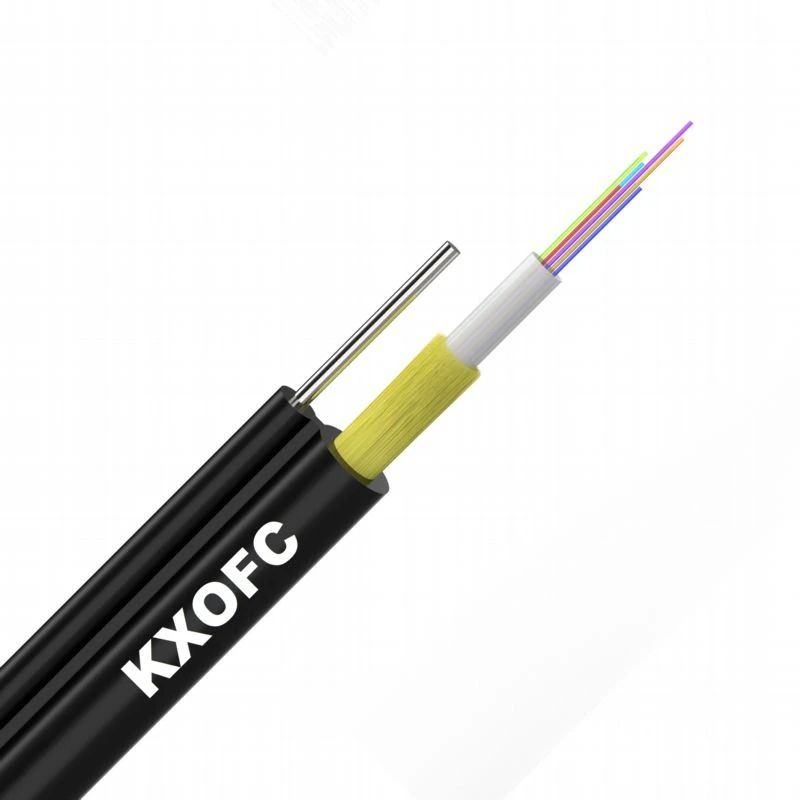
Single Fiber Cable
GYXYC8Y with yarn single fiber cable, Fig 8 uni-tube optical fiber cable with yarn for installation in aerial environment for long haul communications. High tensile strength of stranded wires meet the requirement of self-supporting.
Description
Technical Parameters
our company
Features

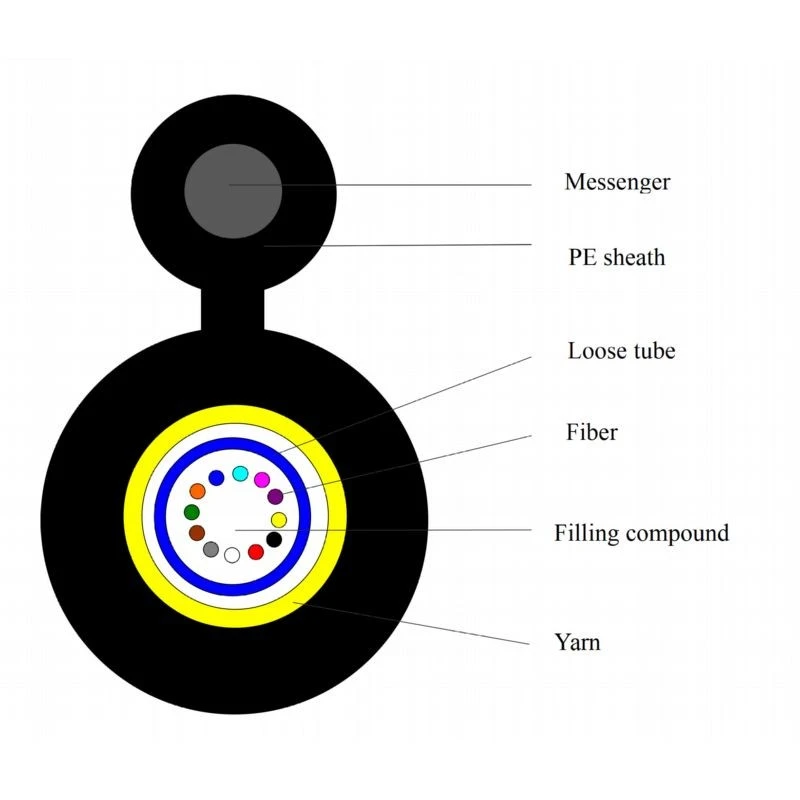
- Small cable diameter, light weight.
- High tensile strength of stranded wires meet the requirement of self-supporting and reduce the installation cost.
Environmental Characteristics
• Transport/storage temperature: -40℃ to +60℃
Delivery Length
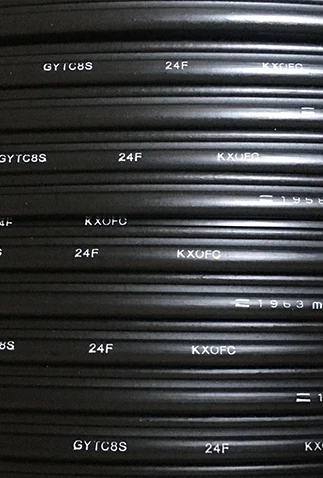
• Standard reel length: 2km/drum; other lengths are also available.
What is the production lead time for customized orders?
Standard stock orders ship within 3–5 days. Customized optical cables take 7–12 working days according to specifications.
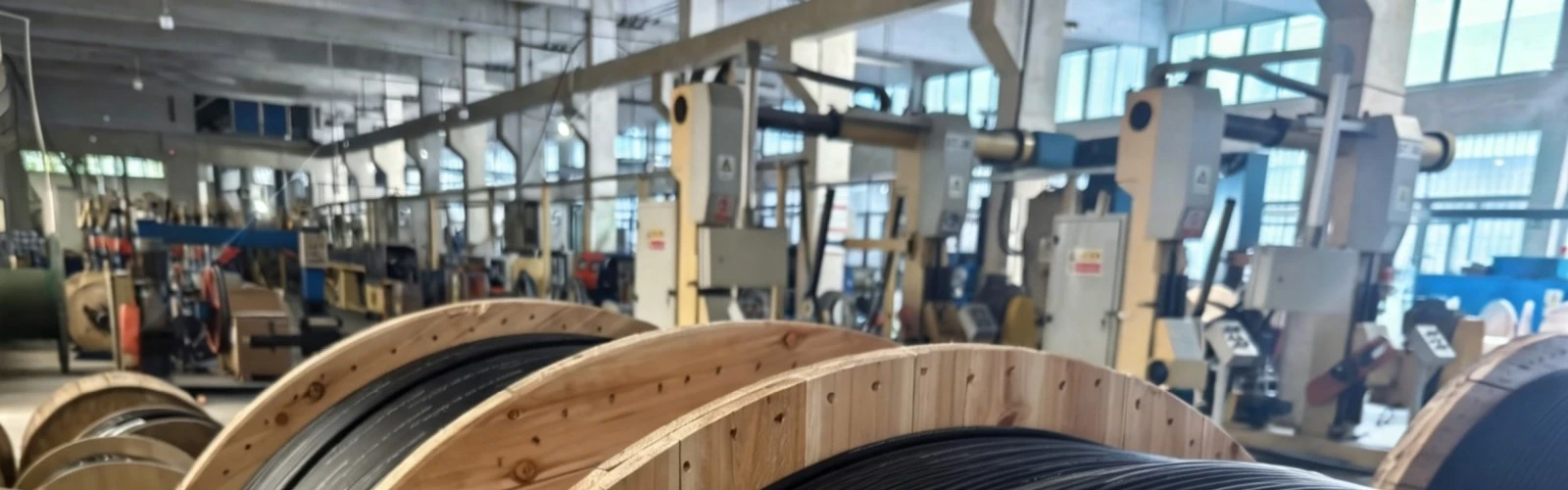
own brand




Pack and ship


Tips
The basic concept of excess length in optical cables is divided into sheath excess length and structural excess length.
Sheath excess length is the relative value between the length of the single fiber cable in the sheath and the length of the sheath, as defined below. Structural excess length exists only in stranded optical cable structures. It is the excess length generated by the sheath containing optical fibers being spirally wound around the central strengthening member. When the optical cable is stretched, the optical fibers in the sheath gradually move towards the central strengthening member as the optical cable is stretched. During this process, the optical fibers do not generate fiber strain, hence this is called the structural excess length of the optical cable.
The law of thermal expansion states that the length of an optical cable changes with ambient temperature, a phenomenon known as thermal expansion and contraction. For stranded optical cables, cable contraction leads to changes in the core pitch, which in turn affects the excess length in the sheath. When this excess length exceeds the minimum bending radius, the additional attenuation begins to increase. The relationship between optical cable strain and temperature is as follows: where ΔT represents the temperature change, and αe is the equivalent linear expansion coefficient of the optical cable. This equivalent linear expansion coefficient is related to the constituent materials of the optical cable. Assuming the materials between the optical cable layers are tightly packed and have sufficient friction, no relative slippage occurs between the layers during cable elongation or contraction. In this case, the elongation and contraction of the optical cable will follow the equivalent linear expansion coefficient. The equivalent linear expansion coefficient is as follows: where En, Sn, and αn represent the Young's modulus, cross-sectional area, and linear expansion coefficient of each constituent material of the optical cable, respectively.
The tensile and temperature testing properties of optical cables are crucial parameters, determining whether they can be used in specific environments and meet special customer requirements. The excess length of the cable is closely related to these two properties, making its design particularly important. This paper, based on the sinusoidal wave model and fundamental theories of optical fibers, derives numerous formulas to deeply investigate the generation mechanism of single fiber cable excess length and its impact on tensile and temperature testing properties, providing a theoretical basis for the design and optimization of optical fiber excess length in industry.
Hot Tags: single fiber cable, China single fiber cable manufacturers, suppliers, factory, Aerial Fiber Optic Cable, Fiber Optic Overhead Cable, fig 8 self support optical fiber cable, Figure 8 Fiber Optic Cable, Outdoor Aerial Fiber Optic Cable, Self Supporting Aerial Fiber Cable
Technical Characteristics
|
Fiber Count |
2~12 |
|
Loose Diameters |
2.0 mm |
|
Loose Material |
PBT (Polybutylene Terephthalate) |
|
Strength Member |
Yarn |
|
Self Strength Messenger |
7*0.4mm steel wires |
|
Outer Jacket Material |
HDPE |
|
Nominal Outer Dimensions |
4.2mm*7.0mm (±0.3) |
|
Tension Strength (Long-Term /Short-Term) |
3000N/7000N |
|
Crush Resistance (Long-Term /Short-Term) |
300 N/100mm 1000 N/100mm |
|
Minimum Bend Radius (Static / Dynamic) |
10 x OD / 20 x OD |
*All above the cable size can be customized.
Previous
No InformationNext
Aerial FiberSend Inquiry


